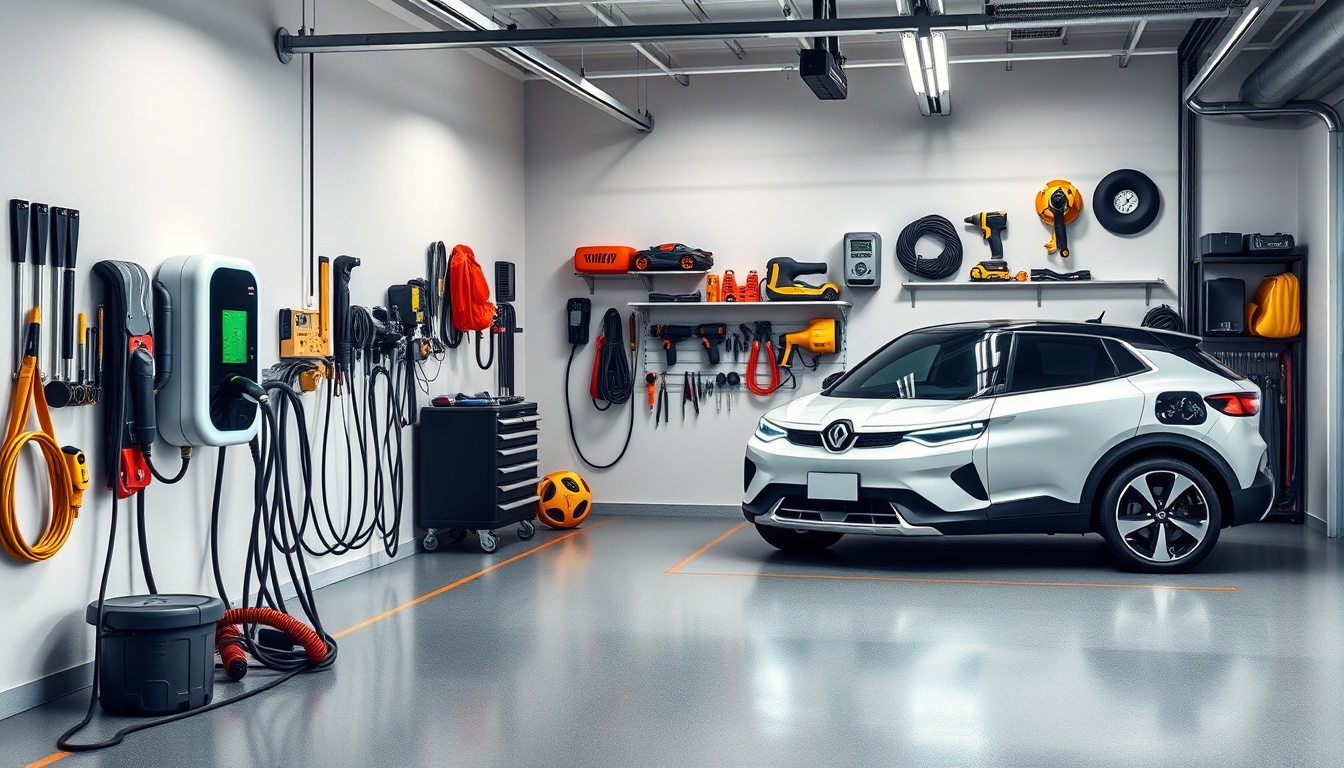
As electric vehicles (EVs) continue to rise in popularity, many homeowners are considering the installation of home EV chargers to enhance convenience and accessibility.
However, before making the jump into EV ownership, it’s important to understand the various factors that contribute to the home EV charger installation cost.
In this article, we’ll explore the essential aspects of installing a home EV charger, including the different types of chargers available, average costs associated with installation, and potential savings and incentives.
Whether you’re a seasoned EV enthusiast or a first-time buyer, by the end of this article, you’ll be well-equipped to evaluate your options and make informed decisions about your home charging needs.

Key Takeaways
- Home EV charger installation costs vary depending on factors such as location and electrical requirements.
- Different types of EV chargers come with varying price points and features.
- Breaking down average costs helps homeowners budget appropriately for installation.
- Consider additional costs like permits, labor, and electrical upgrades that may arise during installation.
- Research potential savings and incentives available for installing EV chargers to offset costs.
Introduction to Home EV Charger Installation
As electric vehicles (EVs) become increasingly popular, the demand for convenient charging solutions at home is rising.
When considering home EV charger installation, one of the first questions that arises is the home EV charger installation cost.
This expense can vary widely based on several factors, including the type of charger selected, the electrical capacity of your home, and local labor rates.
A Level 2 charger, which offers faster charging than a standard outlet, typically ranges from $400 to $700 for the unit alone, not including installation.
Homeowners may also need to factor in the cost of any necessary electrical upgrades, such as a panel upgrade or additional wiring, which can further influence the overall budget.
Understanding these elements is crucial for anyone looking to invest in a home charging station, as it allows for better planning and ensures that EV owners can enjoy the benefits of electric driving with the convenience of charging at home.
Factors Influencing Installation Costs
When considering the home EV charger installation cost, several key factors come into play that can significantly impact the final price.
Firstly, the type of EV charger selected—whether a Level 1 or Level 2 charger—plays a crucial role, as Level 2 chargers tend to be more expensive but offer faster charging times.
Additionally, the existing electrical infrastructure of your home is vital; a home with an older electrical panel may require upgrades, which can add to the installation costs.
Location also matters; homes situated far from electrical service entry points may incur higher labor and material costs due to increased wiring requirements.
Furthermore, regional labor rates and local permitting requirements can vary, influencing the total expense of installation.
Understanding these factors can help homeowners better estimate their home EV charger installation cost and make informed decisions.
‘An investment in knowledge always pays the best interest.’ – Benjamin Franklin

Types of EV Chargers and Their Costs
When considering the home EV charger installation cost, it’s essential to understand the various types of chargers available and their respective price ranges.
There are primarily three types of EV chargers: Level 1, Level 2, and DC Fast Chargers.
Level 1 chargers typically utilize a standard 120-volt outlet and have the lowest installation cost, often totaling between $300 to $600, making them an accessible option for many homeowners.
However, they are also the slowest, providing about 2 to 5 miles of range per hour of charging.
Level 2 chargers, which require a 240-volt outlet, are the most popular choice for home installations due to their balance of cost and charging speed, generally falling between $500 and $2,000, depending on the device and installation complexity.
Lastly, DC Fast Chargers, while ideal for quick charging and often found in commercial settings, can be prohibitively expensive for home use, with installation costs that can exceed $10,000.
Therefore, when planning for a home EV charger installation, it’s vital to consider not only the initial setup cost but also the long-term benefits of faster charging capabilities.
Comprehensive Charging Guidance
Understanding installation costs is just one part of the equation. For complete information about all aspects of EV charging, explore our comprehensive electric vehicle charging guide that covers charging types, infrastructure, and best practices.
Before investing in a home charger, use our electric car charging cost calculator to estimate not just installation expenses but also long-term operating costs and potential savings compared to public charging stations.
Expert Installation Insights
According to Consumer Reports’ home EV charging installation guide, proper planning and understanding of electrical requirements can help homeowners avoid unexpected costs and ensure a smooth installation process.
Vehicle-Specific Charging Considerations
Different electric vehicles have varying charging requirements that can impact installation costs. Research your specific model’s needs, whether it’s a Tesla Model X, Kia electric car, or other EV, to ensure proper charger selection.
Understanding Charging Levels
Different charging levels suit different needs and budgets. For detailed explanations of Level 1, Level 2, and Level 3 charging and how they impact home installation decisions, review our comprehensive EV charging guide.
Sustainable Home Charging Options
For environmentally conscious homeowners, consider integrating electric car solar chargers with your home installation to power your EV with renewable energy and further reduce operating costs over time.
Installation Considerations by Vehicle Type
Affordable Electric Vehicles
If you own or are considering affordable electric vehicles or the most affordable electric cars, Level 2 home charging provides the best balance of installation cost and charging speed for daily use.
Electric SUVs and Larger Batteries
Owners of electric SUVs like Kia’s electric SUV models, the Volvo XC40 Recharge EV, or Hyundai Kona benefit from higher-amperage Level 2 chargers to efficiently charge larger battery packs.
Premium Electric Vehicles
Luxury EVs from BMW’s electrical car lineup or the Volvo C40 often come with higher charging capabilities, potentially requiring more robust electrical infrastructure and impacting installation costs.
Battery Technology and Charging Requirements
Understanding EV Batteries
Different battery technologies have varying charging requirements. Learn about EV battery technology to understand how battery size and chemistry affect your home charging needs and electrical infrastructure requirements.
Emerging Battery Technologies
Future electric vehicles may use advanced battery technologies that could impact home charging requirements:
- Lithium-Sulfur battery technology – potentially faster charging acceptance
- Sodium-Ion battery technology – different charging profiles
- Nickel-Metal Hydride technology – proven charging characteristics
- Flow battery technology – unique charging approaches
Smart Charging Technology
While basic chargers suffice for most users, smart charging features can optimize energy use and costs. Consider these advanced options when budgeting for your installation, keeping in mind they may increase initial costs but provide long-term savings.
Regional Incentive Programs
Installation incentives vary significantly by region. Check our regional guides for location-specific rebates and programs:
- Electric car incentives in the UK – including home charger grants
- Electric cars in Malaysia – regional charging infrastructure support
- Electric cars globally – worldwide incentive programs
Long-Term Financial Benefits
Beyond installation incentives, understand the broader financial picture. Learn about how electric vehicles save the environment and your wallet through reduced fuel costs and maintenance expenses.
Choosing the Right Home Charger for Your Needs
First-Time EV Buyers
New to electric vehicles? Review the pros and cons of electric cars to understand whether home charging installation makes sense for your lifestyle and budget before committing to the expense.
Family Charging Solutions
Families with multiple EVs or considering 7-seater electric cars may need to install multiple chargers or higher-capacity systems, impacting overall installation costs and electrical requirements.
Performance Vehicle Owners
Owners of high-performance EVs from our fastest electric cars guide may need maximum-amperage Level 2 chargers to efficiently charge larger battery packs and take advantage of faster charging capabilities.
Popular EV Models and Charging Recommendations
Compact Electric Vehicles
Budget-friendly models like the MG ZS EV, BYD Seal, and Hyundai Kona work well with standard 40-amp Level 2 chargers, keeping installation costs reasonable.
Asian Brand Electric Vehicles
Popular models from Hyundai and Kia typically come with flexible charging capabilities, allowing homeowners to choose installation options that fit their budget.
Emerging EV Options
Newer entrants like the Fisker Ocean feature modern charging technology that works efficiently with standard Level 2 home installations, though it’s important to verify specific electrical requirements.
Finding Professional Installation Services
Ready to install your home EV charger? Use our electric car showroom and service locator to find certified electricians and EV specialists in your area who can provide accurate installation quotes.
How do I calculate total home charging costs including installation?
Use our electric car charging cost calculator to estimate both one-time installation expenses and ongoing electricity costs. Factor in available incentives from our regional guides for accurate budgeting.
What charging level do I need for my specific electric vehicle?
This depends on your vehicle model and daily driving needs. Review our comprehensive electric vehicle charging guide to understand which charging level best suits your vehicle, whether it’s a Tesla Model X, Kia SUV, or other model.
Can I install a solar-powered home EV charger?
Yes! Learn about electric car solar chargers and how to integrate solar panels with your home charging installation for maximum sustainability and long-term cost savings.
Do different electric vehicle brands require different chargers?
Most modern EVs use standard J1772 connectors (Tesla uses adapters). However, charging speed capabilities vary. Research your specific model—whether BMW, Volvo, Hyundai, or others—to select the appropriate charger amperage.
Is home charging installation worth it for affordable EVs?
Absolutely! Even with the most affordable electric cars, home charging provides convenience and cost savings. Review the pros and cons of electric cars to understand the full value proposition.
What are the environmental benefits of home EV charging?
Home charging, especially when paired with renewable energy, maximizes environmental benefits. Learn about how electric vehicles save the environment and how solar charging enhances these benefits.
Where can I find local electricians experienced with EV charger installation?
Use our service locator to find certified EV charger installers in your area. Also consult our comprehensive charging guide for installation best practices and questions to ask potential electricians.
Do I need a home charger if I own a budget-friendly EV?
Yes! Affordable electric vehicles benefit greatly from home charging convenience. Calculate your savings using our charging cost calculator to see how home charging pays for itself over time.
What charging solution works best for families with multiple EVs?
Families with multiple vehicles, especially 7-seater electric cars or multiple electric SUVs, should consider installing multiple Level 2 chargers or a higher-capacity electrical service. Consult our charging infrastructure guide for multi-vehicle solutions.
Average Cost Breakdown for Installation
Understanding the home EV charger installation cost is crucial for homeowners considering the transition to electric vehicles.
The average installation fee can vary widely based on several factors.
Typically, the cost for installing a Level 2 home EV charger ranges from $500 to $2,000, depending on the equipment and complexity of the installation.
For instance, if your electrical panel needs upgrading to support higher amperage, this could escalate costs between $1,000 and $3,000.
Additionally, local permitting fees and utility company incentives can further influence the overall expense.
It’s vital to conduct thorough research and obtain quotes from multiple licensed electricians to ensure you’re getting a competitive rate.
By assessing these components, you can better equip yourself to budget accurately for the installation of your home EV charger.

Additional Costs to Consider
When exploring the topic of home EV charger installation cost, it’s essential to consider additional costs that may arise beyond the initial equipment and installation fees.
For instance, homeowners might encounter expenses related to electrical panel upgrades, particularly if their current panel cannot support the new charging equipment’s power requirements.
Furthermore, permits and inspections may be necessary, depending on local regulations, adding to the overall budget.
Potential landscaping alterations may also be needed for cable runs, especially if you’re aiming for a discreet installation.
Lastly, consider any optional features like smart charging technology that may enhance functionality but could also increase the home EV charger installation cost significantly.
By factoring in these extras, you can develop a more comprehensive budget that fully prepares you for a smooth transition to electric vehicle ownership.
Potential Savings and Incentives
When considering a home EV charger installation cost, many homeowners often overlook the significant savings and incentives available to them.
Installing an electric vehicle (EV) charger at home not only provides the convenience of charging your vehicle overnight but can also lead to substantial financial benefits.
Various state and federal programs offer incentives that can dramatically reduce the upfront installation cost.
For instance, tax credits and rebates can sometimes cover a portion of the installation costs, while some utility companies provide additional discounts or lower electricity rates during off-peak hours, further decreasing your overall expenses.
Additionally, driving an electric vehicle can lead to savings on fuel costs compared to traditional gasoline-powered cars, allowing homeowners to recoup their investment in a home EV charger more quickly.
This makes transitioning to an electric vehicle not just an environmentally friendly choice, but also a financially savvy one.

Conclusion: Evaluating Your Home EV Charger Needs
In conclusion, evaluating your home EV charger needs is essential for a seamless transition to electric vehicle ownership.
Understanding the home EV charger installation cost will enable you to budget effectively and select the right charging solution for your lifestyle.
Factors such as the type of charger, installation requirements, and local utility incentives can all influence the overall expenses.
By conducting thorough research and considering your driving habits, you can make an informed decision that ensures your charging station meets your daily commutes and longer journeys efficiently, ultimately contributing to a more sustainable future.
Frequently Asked Questions
What factors influence the installation cost of a home EV charger?
The installation cost of a home EV charger can be influenced by several factors such as the type of charger you choose (Level 1 or Level 2), the electrical capacity of your home, the distance from your main electrical panel to the installation site, any necessary upgrades to your electrical system, and local labor rates.
What are the different types of EV chargers and their associated costs?
There are primarily two types of EV chargers: Level 1 and Level 2.
Level 1 chargers typically cost between $300 to $600, while Level 2 chargers range from $600 to $1,200 for the unit alone.
Installation costs can add another $500 to $2,000 depending on your home’s electrical setup.
What is the average breakdown of costs for home EV charger installation?
On average, the total cost for home EV charger installation can range from $1,000 to $2,500.
This includes the charger unit itself, installation labor, any necessary electrical upgrades, permits, and inspections.
Are there any additional costs to consider when installing a home EV charger?
Yes, additional costs can include permits, inspection fees, any landscaping or concrete work needed to accommodate the charger, and potential upgrades to your electrical panel or wiring.
It’s also important to account for ongoing electric costs to charge your vehicle.
What potential savings and incentives are available for installing a home EV charger?
Many states and local governments offer rebates and tax incentives to encourage EV charger installation, which can significantly offset your installation costs.
Additionally, charging at home can be cheaper than using public charging stations, providing long-term savings on fuel costs.