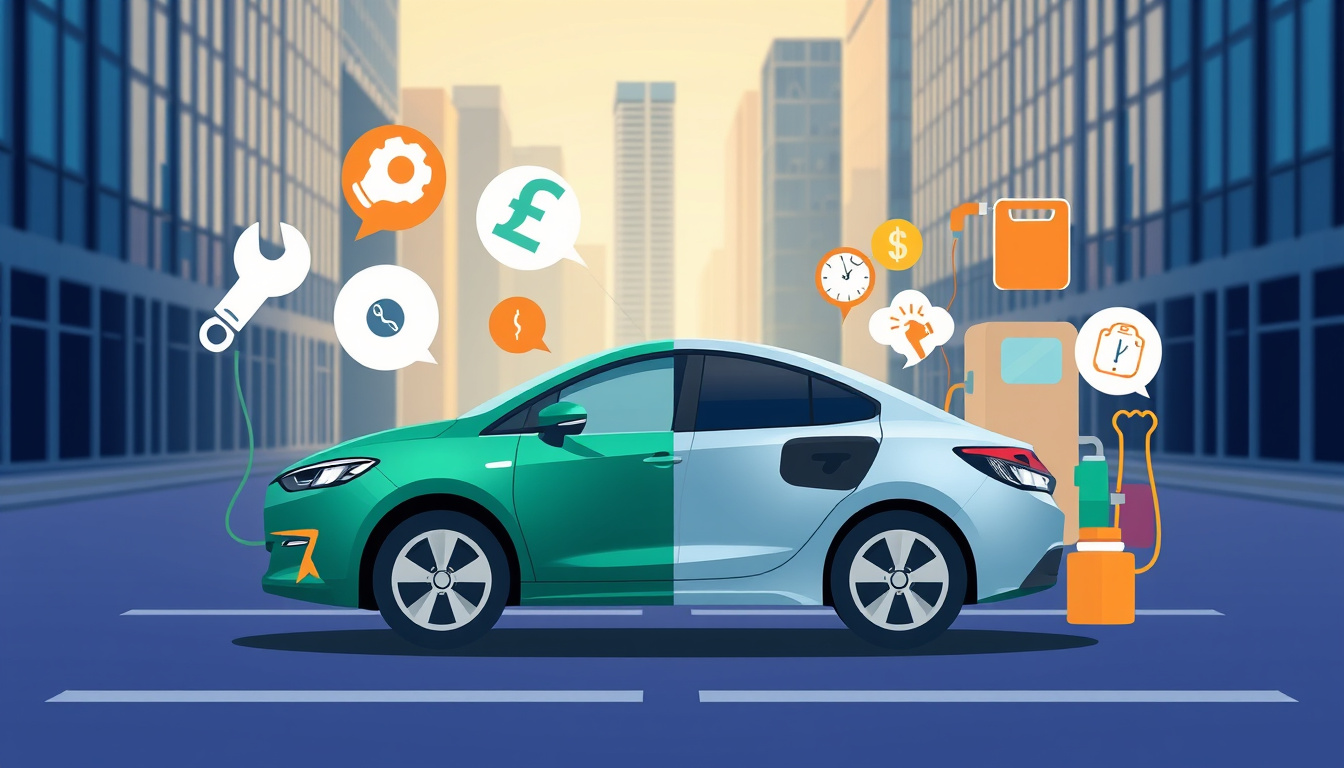
As the automobile industry evolves, the debate between electric vehicles (EVs) and gasoline cars continues to gain momentum.
One of the primary considerations for potential car buyers is the maintenance costs associated with each type.
In this article, we will delve into the electric car maintenance costs vs gas cars, examining which option is more affordable in the long run.
We’ll explore the maintenance requirements for both vehicle types, enabling readers to make informed decisions on their next car purchase.

Key Takeaways : Electric Car Maintenance Costs vs Gas
- Electric cars generally have lower maintenance costs compared to gasoline cars due to fewer moving parts.
- Battery replacement for electric vehicles can be a significant expense impacting long-term maintenance costs.
- Gasoline cars typically require more frequent oil changes and exhaust system maintenance.
- Factors such as vehicle age, manufacturer, and driving habits greatly influence maintenance costs for both types of cars.
- Overall, considering lifetime costs, electric vehicles are often more cost-effective than gasoline vehicles.
Introduction to Electric and Gas Cars
When considering a new vehicle, one of the crucial factors potential buyers evaluate is the \’electric car maintenance cost vs gas\’ comparison.
This comparison goes beyond fuel expenses and includes routine upkeep, repairs, and overall longevity.
Electric vehicles (EVs) tend to have lower maintenance costs because they feature fewer moving parts than traditional gas-powered cars, which often rely on complex engines and transmission systems.
For instance, EVs do not require oil changes, and they typically have less wear and tear on brakes due to regenerative braking systems.
On the other hand, gas cars necessitate regular servicing, including oil changes, transmission fluid checks, and exhaust system maintenance, all of which can add up significantly over time.
Understanding this key difference can help consumers make informed decisions when choosing between electric and gas vehicles, ultimately leading to long-term savings and environmental benefits.
Overview of Maintenance Costs for Electric Cars
When considering the total cost of ownership for vehicles, understanding the electric car maintenance cost vs gas cars is crucial for potential buyers.
Electric vehicles (EVs) offer several advantages over traditional gasoline vehicles, not just in terms of fuel efficiency but also in maintenance costs.
Generally, electric cars have fewer moving parts than their gas counterparts, which means there are fewer components that could potentially fail or require replacement.
For instance, electric vehicles do not require oil changes, fuel filter changes, spark plugs, or exhaust system repairs, resulting in significant savings in maintenance over time.
Studies indicate that electric car maintenance costs are typically 30-50% lower than those of gas vehicles, attributable to the simpler drivetrains and regenerative braking systems that reduce wear and tear on brakes.
However, it’s important for prospective EV owners to consider factors such as battery replacement costs, which can be a significant expense at the end of the battery’s life.
Overall, while the initial investment for an electric vehicle may be higher, the long-term savings in maintenance make them an appealing option for budget-conscious consumers.
‘The best way to predict the future is to create it.’ – Peter Drucker

Overview of Maintenance Costs for Gasoline Cars
When considering the overall ownership experience of a vehicle, it is crucial to examine maintenance costs, particularly when comparing electric car maintenance cost vs gas vehicles.
Generally, gasoline cars require more frequent and often more expensive maintenance due to their complex internal combustion engines.
This includes regular oil changes, exhaust system repairs, and more frequent brake replacements.
On the other hand, electric vehicles (EVs) tend to have lower maintenance costs, as they have fewer moving parts and do not require oil changes or traditional engine upkeep.
Moreover, the simplicity of electric drivetrains typically translates into fewer scheduled maintenance services, which can lead to significant long-term savings for EV owners.
While the initial purchase price of electric cars might be higher, the reduced maintenance expenses can be a compelling benefit that many consumers overlook when evaluating the electric car maintenance cost vs gas options.
By understanding these differences, potential buyers can make a more informed decision based on their budget and lifestyle.
Understanding the Full EV Ownership Experience
Before diving into maintenance costs, it’s essential to understand the complete picture of electric vehicle ownership. Review our comprehensive guide on the pros and cons of electric cars to evaluate all factors beyond just maintenance expenses.
For those considering the switch to electric, explore affordable electric vehicles that offer low maintenance costs without sacrificing quality or features.
Expert Cost Analysis
According to Consumer Reports’ comprehensive EV cost analysis, electric vehicles can save owners thousands of dollars in maintenance costs over the lifetime of the vehicle compared to traditional gas-powered cars, with the savings becoming more significant after the first few years of ownership.
Battery Technology and Longevity
Understanding EV battery technology is crucial for evaluating long-term maintenance costs. Modern batteries are more durable than many assume, and learning about Lithium-Sulfur and Sodium-Ion battery technologies helps predict future improvements.
For detailed information on maximizing battery life and minimizing replacement costs, explore our guide on EV battery lifespan and degradation.
Charging Infrastructure Costs
While not traditional “maintenance,” charging infrastructure is an ownership cost consideration. Our electric vehicle charging guide explains charging options, and our charging cost calculator helps estimate long-term energy expenses.
Maintenance Costs by Vehicle Type
Affordable Electric Vehicles
Budget-friendly EVs like the most affordable electric cars, including models like the MG ZS EV and BYD Seal, offer low maintenance costs that make electric ownership accessible to budget-conscious buyers.
Electric SUV Maintenance
Electric SUVs such as Kia’s electric SUV models, the Volvo XC40 Recharge EV, and Hyundai Kona maintain the low-maintenance advantages of EVs while providing family-friendly space and utility.
Premium Electric Vehicles
Luxury EVs from BMW’s electrical car lineup, the Tesla Model X, and the Volvo C40 feature sophisticated systems that, while potentially more expensive to repair, still cost significantly less to maintain than equivalent luxury gas vehicles.
Hidden Gas Car Maintenance Costs
Gas vehicles incur numerous maintenance expenses that electric cars avoid entirely, including timing belt replacements, catalytic converter repairs, and transmission services—costs that can easily exceed $1,000-$3,000 over the vehicle’s lifetime.
Specific Model Comparisons
Asian Electric Vehicles
Models from Hyundai and Kia are particularly notable for their excellent warranty coverage (often 10 years/100,000 miles on batteries), providing peace of mind regarding potential maintenance costs.
European Premium EVs
While vehicles from BMW and Volvo may have higher parts costs, they still offer substantial maintenance savings compared to their gas-powered equivalents.
Emerging EV Brands
Newer options like the Fisker Ocean promise low maintenance costs through simplified mechanical designs and comprehensive warranty coverage.
Battery Technology Impact on Maintenance
Current and Future Battery Technologies
Understanding battery technology evolution helps predict future maintenance costs:
- Lithium-Sulfur battery technology – potentially lower replacement costs
- Sodium-Ion battery technology – more affordable materials
- Nickel-Metal Hydride technology – proven longevity in hybrids
- Flow battery technology – potential for minimal degradation
Charging Habits and Maintenance
Proper charging practices can reduce long-term maintenance needs. Our electric vehicle charging guide explains optimal charging strategies that preserve battery health and minimize degradation-related costs.
Home Charging Infrastructure
While home charging installation represents an upfront cost, it contributes to lower long-term expenses. Learn about costs and options in our guide on EV charging infrastructure and use our cost calculator to evaluate total ownership expenses.
Regional Cost Considerations
Market-Specific Maintenance Costs
Maintenance costs vary by region due to labor rates, parts availability, and local incentives. Explore our regional guides:
- Electric car ownership in the UK – including service costs and warranties
- Electric cars in Malaysia – Asian market maintenance considerations
- Electric cars globally – worldwide cost comparisons
Finding Qualified Service
Locating qualified EV technicians can impact maintenance costs and convenience. Use our electric car service locator to find certified specialists in your area.
Environmental Cost Savings
Beyond direct maintenance savings, EVs offer environmental benefits that translate to societal cost reductions. Learn more about how electric vehicles save the environment and contribute to cleaner air and reduced healthcare costs.
Family and Performance Vehicle Considerations
Family Electric Vehicles
Families considering larger EVs like 7-seater electric cars with 3 rows benefit from the same low maintenance advantages while accommodating growing family needs.
Performance EVs vs Performance Gas Cars
High-performance electric vehicles from our fastest electric cars guide still maintain significant maintenance cost advantages over comparable gas-powered sports cars, despite higher initial purchase prices.
Sustainable Charging and Maintenance Synergy
Solar-Powered Maintenance Savings
Pairing your EV with electric car solar chargers not only reduces energy costs but also represents a sustainable approach to vehicle ownership that aligns with the low-maintenance EV philosophy.
Comprehensive Cost Analysis
For complete cost evaluation including charging, maintenance, and depreciation, use our comprehensive cost calculator to compare total ownership expenses between electric and gas vehicles based on your specific usage patterns.
Making an Informed Decision
Before making your final decision, visit an electric car showroom to discuss maintenance costs and warranties with dealers. Real-world experiences from current EV owners can provide valuable insights into actual maintenance expenses.
Comparative Analysis: Electric vs Gas Maintenance Costs
When considering the purchase of a vehicle, one of the most significant factors to assess is the ongoing maintenance costs.
In a comparative analysis of electric car maintenance cost vs gas vehicles, electric cars generally emerge as the more economical choice over time.
Electric vehicles (EVs) have fewer moving parts than traditional gasoline-powered cars, which often translates into lower maintenance needs.
For example, electric motors do not require oil changes, and they often boast regenerative braking systems that reduce wear on brake components.
On the other hand, gas cars typically require frequent oil changes, exhaust system repairs, and more regular brake maintenance due to the greater amount of friction seen in their operation.
Overall, while the initial purchase price of electric vehicles may be higher, the savings on maintenance costs contribute significantly to the total cost of ownership, reinforcing the appeal of electric vehicles in today’s environmentally conscious market.

Factors Influencing Maintenance Costs in Electric and Gas Cars
When considering the costs associated with maintaining a vehicle, it’s important to delve into the distinct factors that influence electric car maintenance cost vs gas car maintenance.
One of the primary factors is the complexity of the vehicle’s technology; electric cars generally have fewer moving parts compared to traditional gas vehicles, which can result in lower maintenance costs over time.
For example, electric vehicles (EVs) do not require oil changes, fuel filters, spark plugs, or exhaust systems, all of which are integral to gas-powered cars.
This reduction in components often translates to fewer trips to the mechanic and, consequently, lower repair bills.
However, while the routine maintenance for EVs might be cheaper, potential costs like battery replacement can be significant, with some batteries requiring replacement after 8 to 15 years depending on usage.
In contrast, gas cars have ongoing fuel and maintenance costs that can accumulate quickly, including regular oil changes, brake repairs, and engine tune-ups.
Other influencing factors include driving habits, local environmental conditions, and the availability of specialized services for electric vehicles, which can affect overall ownership costs.
Understanding these differences can help potential car buyers make informed decisions based on long-term financial implications.
Long-term Financial Impact of Vehicle Maintenance Costs
When considering the long-term financial impact of vehicle ownership, one crucial factor that often gets overlooked is the maintenance cost associated with electric cars compared to traditional gas vehicles.
While many potential buyers are attracted to electric cars due to their lower fuel costs and environmental benefits, it’s essential to dive deeper into the electric car maintenance cost vs gas vehicles.
On average, electric vehicles (EVs) tend to have lower maintenance expenses because they are powered by fewer moving parts, which minimizes wear and tear.
For instance, EVs do not require oil changes, and their braking systems often last longer due to regenerative braking technology.
In contrast, gas vehicles typically incur more frequent maintenance expenses related to oil changes, engine services, and complex mechanical systems.
Over time, this disparity can lead to significant savings for electric car owners, effectively making them not only a greener choice but a financially smarter one as well.
By understanding these long-term financial implications, consumers can make more informed decisions, ensuring that they select a vehicle that aligns with both their budget and environmental values.

Conclusion: Which is More Affordable?
When considering the overall expenses of vehicle ownership, one critical factor stands out: the maintenance costs associated with electric cars versus gas-powered vehicles.
Electric car maintenance cost tends to be significantly lower than that of traditional internal combustion engines.
This is largely due to the fact that electric vehicles (EVs) have fewer moving parts, leading to reduced wear and tear.
Additionally, EVs do not require oil changes, which can save drivers substantial amounts over time.
On the other hand, gas cars often incur costs related to engine maintenance, exhaust systems, and more frequent brake pad replacements.
Overall, when comparing electric car maintenance cost vs gas, it becomes clear that EVs offer a more affordable and sustainable option in the long run, especially as technology continues to advance and the infrastructure for electric vehicles improves.
Frequently Asked Questions
What are the average maintenance costs for electric cars compared to gas cars?
On average, electric cars tend to have lower maintenance costs compared to gas cars.
Electric vehicles typically require less frequent servicing since they have fewer moving parts, with an average annual maintenance cost of approximately $400-$600, whereas gas cars may incur costs ranging from $600-$1,000 yearly due to oil changes, exhaust system repairs, and more complex engines.
What factors influence the maintenance costs of electric and gas vehicles?
The maintenance costs of electric and gas vehicles are influenced by several factors including the vehicle model, usage patterns, local labor costs, type of repairs needed, frequency of servicing, and availability of parts.
Electric vehicles benefit from fewer mechanical components and less frequent maintenance, while gas vehicles may have higher costs associated with engine parts and traditional fluid changes.
How do battery replacements impact the long-term costs of owning an electric car?
Battery replacements can be a significant factor in the long-term costs of electric vehicle ownership.
While modern EV batteries are designed to last between 8 to 15 years, replacement can be expensive, often ranging from $5,000 to $15,000.
However, many manufacturers offer warranties that can cover battery performance over a certain period, which can mitigate these costs.
Do electric cars require special maintenance that can affect their overall expense?
Electric cars do not require the same maintenance as gas cars, but they do have unique maintenance needs, such as regularly checking the battery health and periodically replacing brake fluid or tires.
The lack of oil changes and exhaust system upkeep generally leads to lower overall expenses for electric cars.
Which is more affordable in terms of long-term ownership costs, electric cars or gas cars?
Electric cars generally tend to be more affordable over the long term compared to gas cars, especially when considering lower maintenance costs, fuel savings, and potential tax incentives.
Although the initial purchase price of electric vehicles can be higher, the savings accumulated over time from reduced maintenance and fuel can make them a more economical choice.
Which electric cars have the lowest maintenance costs?
Generally, simpler EVs with smaller batteries have the lowest maintenance costs. Check our guides on the most affordable electric cars and models from Kia and Hyundai, which offer excellent warranties and low maintenance requirements.
How do battery replacement costs affect the comparison?
While battery replacement can be expensive ($5,000-$15,000), most batteries last 8-15 years with proper care. Learn about EV battery technology and optimal charging practices in our charging guide to maximize battery lifespan and minimize replacement likelihood.
Do electric SUVs cost more to maintain than compact EVs?
Electric SUVs like Kia’s models, the Volvo XC40 Recharge, and Hyundai Kona may have slightly higher tire and brake costs due to weight, but still cost far less to maintain than equivalent gas SUVs.
What about luxury EV maintenance costs?
Premium EVs from BMW, Tesla, and Volvo have higher parts costs but still save thousands compared to luxury gas vehicles over ownership lifetime.
How do charging costs factor into total maintenance expenses?
While not traditional maintenance, charging is an operating cost. Our charging cost calculator helps compare total expenses. Consider solar charging to minimize long-term energy costs.
Are there hidden maintenance costs with electric cars?
EVs have fewer hidden costs than gas cars. Primary considerations are tire replacement (possibly more frequent due to instant torque) and eventual battery replacement. Review the pros and cons of electric cars for comprehensive cost understanding.
Do affordable electric cars sacrifice build quality affecting maintenance?
No. Many affordable electric vehicles like the MG ZS EV and BYD Seal offer excellent build quality with comprehensive warranties, ensuring low maintenance costs.
How does battery technology affect maintenance costs?
Advanced battery technologies promise lower maintenance needs. Explore emerging options like Lithium-Sulfur and Sodium-Ion batteries that may offer improved longevity and reduced replacement costs.
Where can I find certified EV maintenance services?
Use our electric car service locator to find certified technicians. Check our comprehensive EV guide for maintenance best practices and service schedules.
Do family-sized electric vehicles cost more to maintain?
Larger EVs like 7-seater electric cars maintain cost advantages over gas equivalents despite their size. Higher battery capacity doesn’t significantly increase maintenance needs—the fundamental simplicity of electric drivetrains remains.
What environmental benefits complement the cost savings?
Beyond financial savings, EVs offer significant environmental benefits. Learn about how electric vehicles save the environment through reduced emissions, cleaner manufacturing, and battery recycling programs.