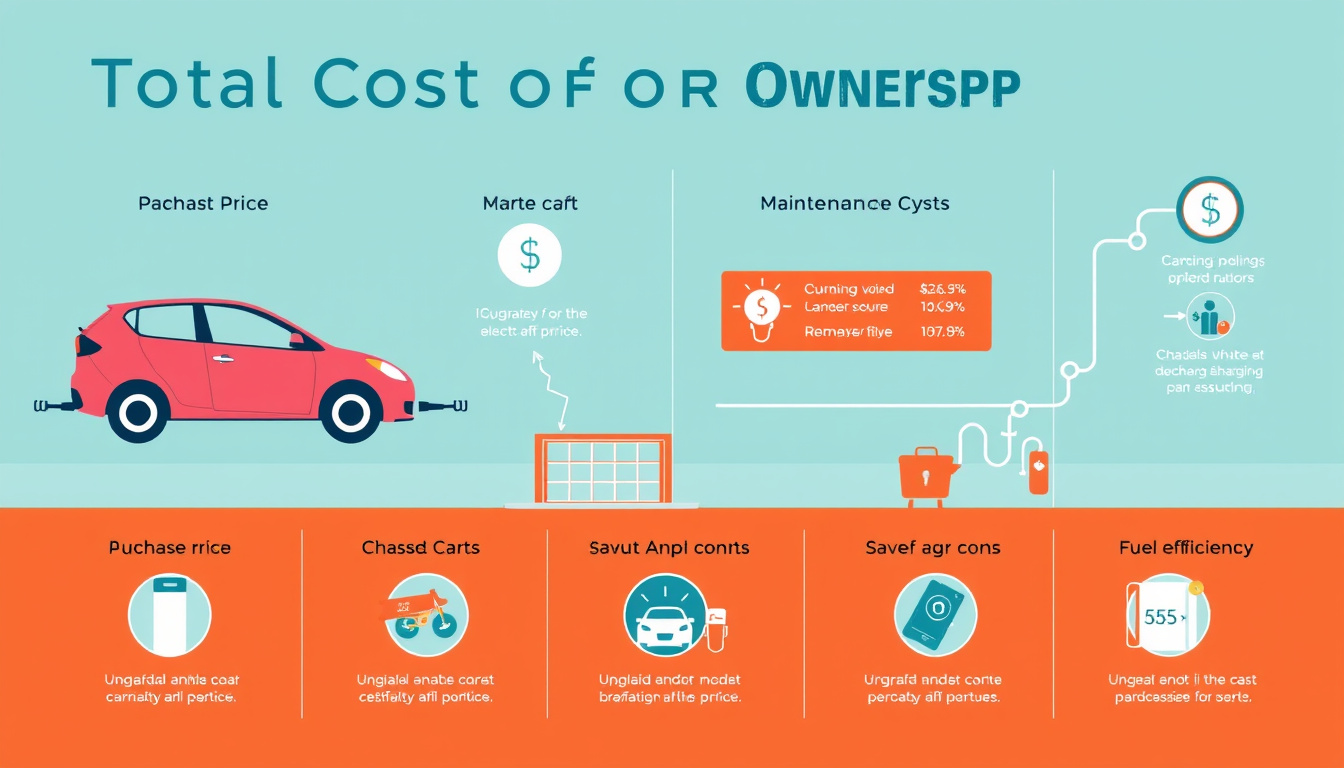
With the growing popularity of electric vehicles (EVs), understanding the Total Cost of Ownership (TCO) for electric cars has never been more crucial for potential buyers.
Many consumers are attracted to the idea of driving an eco-friendly vehicle, but the financial implications of making the switch from traditional gasoline cars to electric models warrant thorough exploration.
In this comprehensive guide, we’ll delve into what TCO entails, the factors that influence it for electric cars, and how to calculate it for your personal situation.
By the end of this article, you will be equipped with the knowledge to make an informed decision when considering your next vehicle.
Key Takeaways
- Total Cost of Ownership (TCO) encompasses all expenses associated with owning an electric car over its lifecycle.
- Factors influencing TCO include purchase price, maintenance costs, fuel savings, and tax incentives.
- While electric cars may have higher initial purchase prices, they often lead to significant long-term savings.
- Maintenance costs for electric vehicles tend to be lower compared to traditional gasoline cars.
- Electricity as a fuel source is generally cheaper than gasoline, contributing to overall TCO savings.
Introduction to Total Cost of Ownership (TCO)
The concept of Total Cost of Ownership (TCO) is crucial for consumers considering the purchase of an electric vehicle (EV).
When evaluating the total cost of ownership electric car buyers must look beyond the initial purchase price and consider several factors that contribute to long-term expenses.
These include maintenance, fuel costs, tax incentives, and resale value.
By analyzing these components, potential buyers can better understand how an electric vehicle can be a cost-effective choice in the long run.
For instance, while electric cars generally have a higher upfront price compared to traditional gas-powered vehicles, their lower maintenance costs and fuel savings can significantly narrow the gap over time.
Furthermore, many governments offer tax rebates and incentives for electric car owners, which can further reduce the TCO.
Understanding the total cost of ownership for electric cars enables consumers to make informed decisions that align with both their financial goals and environmental considerations.
Factors Influencing the TCO of Electric Cars
When considering the total cost of ownership electric car enthusiasts often look beyond the initial purchase price.
Numerous factors come into play that can significantly impact the overall expenses associated with owning an electric vehicle (EV).
First and foremost, electricity costs differ by region, and understanding local rates can help estimate charging expenses.
Additionally, maintenance costs for electric cars tend to be lower compared to traditional gas-powered vehicles due to fewer moving parts and the absence of complex powertrains.
Insurance rates can also vary, depending on the model and technology of the electric car, which can influence the total cost of ownership.
Furthermore, government incentives and tax rebates can substantially offset the initial costs and help potential buyers weigh their options more favorable.
Range limitations, charging infrastructure, and battery degradation are also pivotal factors that can affect long-term costs.
By thoughtfully assessing these elements, consumers can gain a clearer picture of the total cost of ownership of electric cars and make more informed decisions about their investment.
‘The best way to predict the future is to create it.’ – Peter Drucker
Initial Purchase Price vs. Long-term Savings
When considering the total cost of ownership of an electric car, many potential buyers focus primarily on the initial purchase price.
While electric vehicles (EVs) can have higher upfront costs compared to traditional gasoline-powered cars, it’s crucial to look beyond that figure to appreciate the long-term savings they offer.
For instance, electric cars generally have lower maintenance costs due to fewer moving parts and no oil changes, which can result in substantial savings over time.
Additionally, EV owners benefit from government incentives and tax credits that can offset the initial costs.
When calculating the total cost of ownership, it’s essential to factor in reduced fuel expenses, as electric charging often costs significantly less than fueling a gasoline vehicle.
This holistic approach reveals that investing in an electric car can lead to considerable financial benefits in the long run, making it a smart choice for environmentally conscious and budget-savvy consumers alike.
Maintenance Costs of Electric Vehicles
When considering the total cost of ownership of an electric car, one critical factor to evaluate is the maintenance costs associated with these vehicles.
Electric vehicles (EVs) are known for their lower long-term maintenance expenses due to fewer moving parts compared to traditional internal combustion engine cars.
For instance, EVs do not require oil changes, and the brake systems generally experience less wear because of regenerative braking.
This translates to reduced servicing costs over the lifespan of the vehicle.
Additionally, many manufacturers provide warranties on electric components and batteries, often covering them for an extended period.
However, it’s essential to factor in potential battery replacement costs, which can be significant after several years.
Overall, when calculating the total cost of ownership of an electric car, it’s crucial to consider these maintenance aspects to get a comprehensive understanding of your financial commitment.
Fuel Costs: Electricity vs. Gasoline
When contemplating the total cost of ownership of an electric car versus a gasoline vehicle, understanding fuel costs is pivotal.
The fuel economy of electric vehicles (EVs) is typically quantified in terms of kilowatt-hours per 100 miles, while gasoline cars are measured in miles per gallon.
Generally, electric cars have lower fuel costs, as electricity tends to be cheaper than gasoline on a per-mile basis.
For example, as of 2023, the average cost of electricity in the U.S.
is about $0.13 per kWh, which can translate to a cost of approximately $3.00 for 100 miles driven.
In contrast, gasoline prices fluctuate, but assuming an average of $3.50 per gallon and a fuel economy of 25 miles per gallon, the same distance would cost around $14.00.
Therefore, from a financial standpoint, when calculating the total cost of ownership of an electric car, fuel costs present a significant advantage, showcasing why many consumers are making the switch to electric vehicles in an effort to save over the lifespan of their car.
Tax Incentives and Rebates for Electric Cars
When considering the total cost of ownership electric car, one must factor in various elements that can significantly affect the overall expense.
Among the most beneficial aspects are tax incentives and rebates that governments around the world offer to promote electric vehicle (EV) adoption.
In the United States, for instance, buyers may qualify for a federal tax credit of up to $7,500 on eligible electric vehicles, directly reducing their tax liability.
Additionally, many states and local governments provide additional incentives such as tax rebates, reduced registration fees, and even grants for home charging station installations.
These financial benefits can considerably lower the total cost of ownership electric car, making the transition to a greener vehicle not only environmentally friendly but also economically viable.
Given the rapidly evolving landscape of EV incentives, it’s crucial for potential buyers to remain informed about available programs and qualifications to maximize their savings.
Calculating Your Own Total Cost of Ownership
Calculating your own total cost of ownership (TCO) for an electric car involves a detailed examination of various financial aspects associated with the purchase and operation of the vehicle.
The total cost of ownership electric car considers not just the upfront purchase price, but also factors such as maintenance costs, insurance, charging expenses, and potential tax incentives.
To start, tally the initial vehicle cost and research federal or state rebates that may lower this figure.
Next, assess the average electricity rates in your area to estimate charging costs based on your anticipated driving habits.
Maintenance for electric vehicles is typically lower than for traditional gasoline cars since they have fewer moving parts and require less routine servicing.
Don’t forget to include costs like insurance premiums, which can vary significantly based on vehicle class and your personal driving record.
Additionally, consider the vehicle’s depreciation rate as it can influence the resale value when you’re ready to sell.
By taking a holistic approach to calculating the total cost of ownership electric car, you can make a more informed decision that aligns with your financial goals.
Total Cost of Ownership for Electric Cars: Why EVs Are Cheaper Than You Think in 2026
Sure, that new Hyundai Kona Electric or Volvo XC40 Recharge might carry a higher sticker price than a gas-powered SUV. But here’s what most buyers miss: the total cost of ownership (TCO) for EVs is often lower—sometimes by tens of thousands over 5–7 years.
Why? Because while you pay more upfront, you save massively on fuel, maintenance, and repairs. No oil changes. No transmission flushes. No exhaust system repairs. And with electricity costing ⅓ to ½ as much per mile as gasoline, those savings add up fast—especially if you charge at home using off-peak rates or solar panels.
Plus, don’t forget federal and state incentives (like the $7,500 U.S. EV tax credit) and lower depreciation on top models like the Tesla Model X or BYD Seal. When you factor it all in, going electric isn’t just eco-friendly—it’s financially smart. And if you’re still weighing the big picture, our deep dive into the pros and cons of electric cars covers more than just cost.
Fuel vs Electricity: The Biggest Monthly Win
Let’s talk real numbers. The average American drives 1,000 miles per month.
- Gas car (30 MPG @ $3.50/gal):
→ 33.3 gallons/month × $3.50 = $116.55/month - EV (3.5 mi/kWh @ $0.14/kWh home rate):
→ 286 kWh/month × $0.14 = $40.04/month
That’s $76+ saved every month—or $912/year—just on “fuel.” Use a home EV charger during off-peak hours, and you could cut that to $25/month.
Public DC fast charging is pricier ($0.40–$0.80/kWh), but most drivers use it for <10% of their charging. The rest? Done at home, quietly and cheaply.
⚡ Want to estimate your personal savings? Try our guide on electric vehicle charging costs and setups.
Maintenance & Repairs: Fewer Parts, Fewer Bills
EVs have 60–70% fewer moving parts than internal combustion engines. That means:
✅ No oil, filters, spark plugs, or timing belts
✅ No exhaust systems or catalytic converters
✅ Regenerative braking = less wear on brake pads
According to Consumer Reports, EV owners spend ~50% less on maintenance over 5 years. For example:
- Gas SUV (e.g., Mazda CX-9): ~$4,500 in maintenance over 5 years
- EV SUV (e.g., Fisker Ocean): ~$2,200
Even EV batteries—once a major concern—are now covered by 8–10 year warranties, and real-world data shows most last well beyond 200,000 miles.
🌍 Lower emissions + lower costs? See how electric vehicles save the environment—and your wallet.
Incentives, Depreciation & Resale: Hidden Value Boosters
Don’t overlook these TCO game-changers:
- Federal Tax Credit: Up to $7,500 for new EVs (if battery meets sourcing rules)
- State Rebates: California, Colorado, and NY offer $1,000–$3,000 extra
- HOV Lane Access: Saves hours (and gas) in traffic-heavy states
- Slower Depreciation: Top EVs like the Kia EV6 retain 60%+ value after 3 years
And because EVs are simpler, they often last longer—meaning you can keep them beyond 10 years without major repairs, unlike many gas cars that need engine/transmission work by year 8.
🚗 Still unsure? Compare entry points in our list of the most affordable electric cars.
Final Thoughts
When you look beyond the window sticker, electric cars often win on total cost of ownership—especially if you drive more than 8,000 miles a year, charge at home, and keep your car for 5+ years. Combine lower “fuel” bills, minimal maintenance, strong warranties, and government incentives, and the math becomes clear: 2026 is the smartest year yet to go electric.
Frequently Asked Questions
What is the Total Cost of Ownership (TCO) for electric cars?
The Total Cost of Ownership (TCO) for electric cars includes all costs associated with owning the vehicle over its lifespan.
This encompasses the initial purchase price, maintenance costs, fuel costs (electricity), insurance, taxes, and any applicable incentives or rebates.
How do maintenance costs for electric cars compare to traditional gas vehicles?
Electric cars generally have lower maintenance costs than traditional gas vehicles.
This is primarily due to fewer moving parts, the absence of oil changes, and less frequent brake replacement, as electric vehicles use regenerative braking.
Are there any tax incentives or rebates available for electric car buyers?
Yes, many countries and states offer tax incentives or rebates for purchasing electric cars.
These can significantly reduce the upfront cost of the vehicle, contributing to a lower overall Total Cost of Ownership.
How can I calculate the Total Cost of Ownership for my possible electric car?
To calculate the Total Cost of Ownership for an electric car, consider all associated costs: initial purchase price, anticipated maintenance costs, fuel costs for electricity, insurance, and any tax incentives or rebates.
You can create a spreadsheet to estimate costs over the vehicle’s expected lifespan.
What is more cost-effective in the long run: an electric car or a gasoline vehicle?
Generally, electric vehicles are more cost-effective in the long run due to lower operating costs (fuel and maintenance) and potential tax incentives.
However, this can vary based on individual driving habits, the price of electricity versus gasoline, and specific vehicle models.