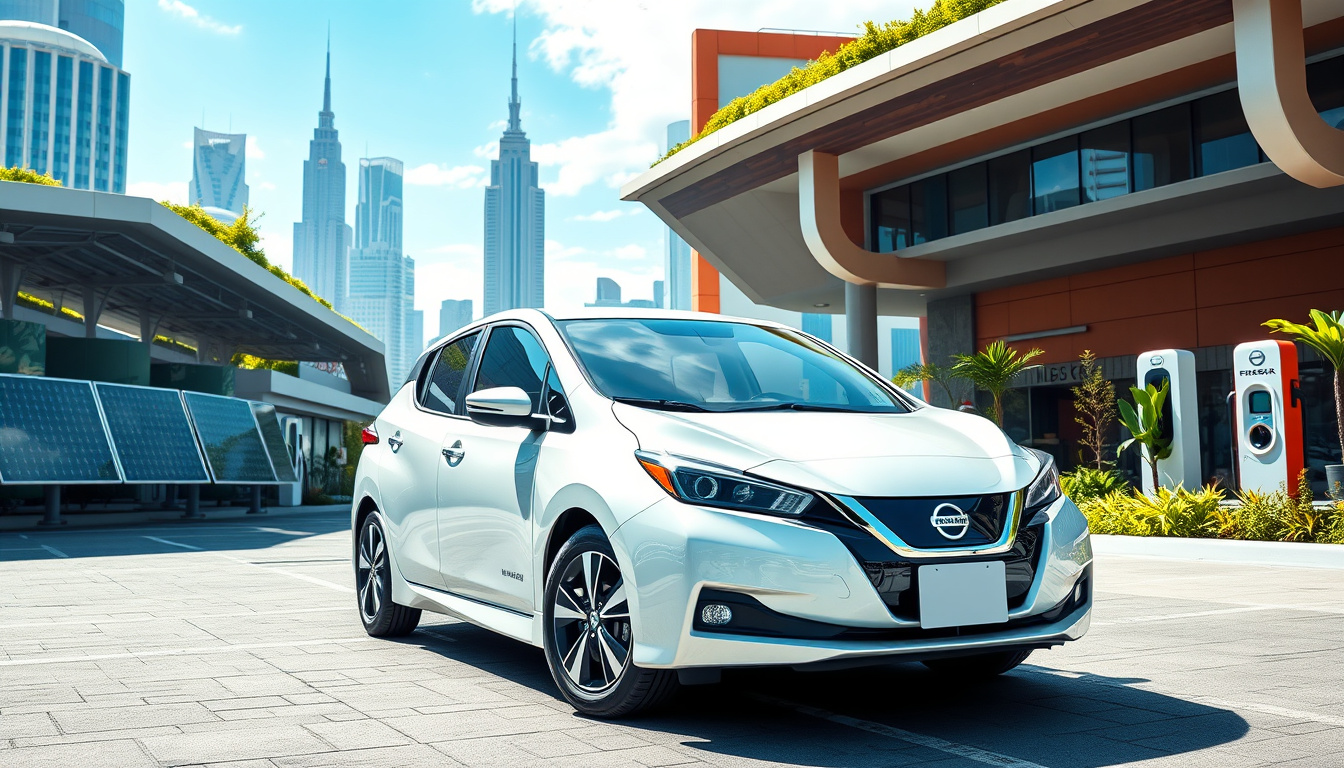
As the world shifts towards more sustainable transportation solutions, the demand for electric vehicles has surged. Leading the charge is the Nissan Leaf electric car, a pioneer in the realm of affordable electric mobility. In this ultimate guide, we’ll delve into the features and specifications that make the Nissan Leaf a standout in the growing electric vehicle market. From its impressive performance to innovative charging options and a comparative analysis with other electric cars, this comprehensive overview will provide you with all the insights you need to understand why the Nissan Leaf is not just a car, but a step toward a greener future.
Key Takeaways
- The Nissan Leaf electric car is designed for efficiency and sustainability.
- It boasts impressive features and specifications that cater to modern drivers.
- The driving experience of the Leaf combines practicality with a smooth, quiet ride.
- Flexible charging options and robust battery life enhance the convenience of owning a Leaf.
- Comparative analysis reveals the Leaf’s competitive edge in the evolving electric vehicle market.
Introduction to the Nissan Leaf Electric Car
The Nissan Leaf electric car has emerged as one of the most popular choices for eco-conscious drivers and technology enthusiasts alike. Launched in 2010, this all-electric hatchback exemplifies Nissan’s commitment to sustainable driving and innovation. With zero tailpipe emissions, the Leaf not only contributes to a cleaner environment but also offers significant savings in fuel expenses, making it an attractive option for budget-minded consumers.
As electric vehicle technology continues to evolve, the Nissan Leaf electric car remains at the forefront, combining practicality with advanced features such as a comprehensive infotainment system and impressive driving range. In this article, we will explore the key features, benefits, and considerations of the Nissan Leaf, helping you determine if this electric vehicle is the right fit for your lifestyle.
Key Features and Specifications
The Nissan Leaf electric car stands out in the world of electric vehicles due to its exceptional blend of innovative technology, efficiency, and user-friendly design. One of the key features of the Leaf is its impressive battery range, which offers around 226 miles on a single charge, catering to both urban and long-distance drivers. The Leaf is equipped with a 110 kW electric motor providing swift acceleration and responsive performance, ensuring a dynamic driving experience.
Additionally, the vehicle’s e-Pedal technology allows for one-pedal driving, simplifying the process of accelerating and braking, which enhances the overall driving efficiency. Safety is also a priority in the Nissan Leaf; it comes with Nissan’s ProPILOT Assist for semi-autonomous driving capabilities and a suite of advanced safety features including automatic emergency braking and pedestrian detection.
With its spacious interior, ample cargo space, and environmentally friendly design, the Nissan Leaf electric car not only exemplifies cutting-edge technology but also represents a sustainable choice for drivers looking to reduce their carbon footprint.
‘The future belongs to those who believe in the beauty of their dreams.’ – Eleanor Roosevelt

Performance and Driving Experience
When it comes to evaluating the performance and driving experience of the Nissan Leaf electric car, there’s quite a bit to unpack. The Leaf offers a smooth and responsive ride, thanks to its electric motor that delivers instant torque, allowing for quick acceleration when you need it most. This makes city driving, with its frequent stops and quick bursts of speed, particularly enjoyable.
The low center of gravity, a result of the battery placement, enhances stability and maneuverability, ensuring that the Nissan Leaf maintains composure even on winding roads. Additionally, the regenerative braking feature not only increases efficiency by charging the battery through deceleration but also imparts a unique driving sensation for those transitioning from traditional gasoline vehicles.
Overall, the Nissan Leaf electric car combines eco-friendly technology with a dynamic driving experience, making it a compelling choice for both daily commuters and environmentally conscious drivers alike.
Charging Options and Battery Life
When considering the Nissan Leaf electric car, one of the most critical aspects to evaluate is its charging options and battery life. The Nissan Leaf boasts a versatile charging system that can accommodate different user needs, from home charging stations to public charging networks.
Home charging is convenient for many owners, as it allows them to simply plug in their vehicle overnight, typically using a standard 120-volt outlet or a more powerful 240-volt Level 2 charger for faster charging times. In terms of battery life, the Nissan Leaf electric car is equipped with a high-capacity lithium-ion battery that offers impressive mileage ranges, making it suitable for daily commutes as well as longer road trips.
Depending on the model, the Leaf can achieve an EPA-estimated range of up to 226 miles on a single charge, ensuring that drivers have the freedom to travel without the constant worry of recharging. Additionally, the availability of fast charging stations makes it easier than ever to recharge the Nissan Leaf quickly during longer journeys, further enhancing its appeal as a practical choice for environmentally conscious drivers.

Comparative Analysis with Other Electric Vehicles
When it comes to the world of electric vehicles (EVs), the Nissan Leaf electric car stands out not only due to its innovative technology but also its practical appeal. A comparative analysis with other electric vehicles reveals why the Leaf has become a preferred choice for many eco-conscious drivers.
Unlike the Tesla Model 3, which is often noted for its performance and range, the Nissan Leaf offers a more affordable entry point, making electric driving accessible to a wider audience. Additionally, while the Chevrolet Bolt EV provides a competitive range, the Leaf excels with its user-friendly technology and comfort features, such as the e-Pedal system that enhances driving ease.
Furthermore, Nissan’s commitment to constant innovation, seen in the Leaf’s recent models equipped with ProPILOT Assist, sets it apart from similar models like the Ford Mustang Mach-E. This comprehensive overview shows that the Nissan Leaf electric car not only competes but often leads in various aspects, making it a compelling option for both new and seasoned electric vehicle enthusiasts.
Future Trends and Innovations in Electric Driving
As we delve into the future trends and innovations in electric driving, the Nissan Leaf electric car emerges as a prime example of how technology is shaping sustainable transportation. Originally launched in 2010, the Nissan Leaf has evolved significantly by incorporating advanced features such as longer battery life, enhanced autonomous driving capabilities, and smart connectivity.
One of the most exciting trends is the ongoing development of solid-state batteries, which promise to improve energy density and reduce charging times. Moreover, manufacturers are increasingly focusing on integrating renewable energy sources into electric driving ecosystems.
With its commitment to innovation, the Nissan Leaf is poised to be at the forefront of this electric revolution, setting standards for efficiency and functionality in an electric vehicle (EV) landscape that is rapidly changing. As the push for eco-friendly transportation accelerates, the Nissan Leaf electric car exemplifies the strides being made toward a greener, more sustainable future in driving.
Nissan Leaf Electric Car: The Pioneer of Practical EVs
The Nissan Leaf holds a special place in electric vehicle history as one of the first mass-market EVs—and over a decade later, it continues to offer a no-nonsense, user-friendly electric driving experience. With its compact hatchback design, proven reliability, and accessible price, the Leaf remains a smart pick for urban drivers, retirees, and anyone seeking a simple, emission-free commute.
1. Approachable Range and Efficient Performance
The current Nissan Leaf offers two battery options: a 40 kWh pack (standard) with 149 miles of EPA-estimated range, and a 62 kWh pack (Leaf Plus/SVE+) delivering up to 212 miles. While not class-leading, this range is more than sufficient for daily errands, school runs, and city commuting—especially with overnight home charging.
The electric motor provides 147–214 horsepower (depending on trim), with smooth, quiet acceleration and responsive handling ideal for stop-and-go traffic.
For buyers prioritizing value, see how the Leaf stacks up in our guide to affordable electric vehicles.
2. Simple, Functional Interior with Familiar Controls
Unlike many modern EVs that rely entirely on touchscreens, the Leaf retains physical buttons for climate and audio controls—making it intuitive and distraction-free. The cabin features comfortable seating for five, decent cargo space (23.6 cu-ft), and a high seating position for good visibility.
Infotainment includes an 8-inch touchscreen, Apple CarPlay, Android Auto, and NissanConnect services—but avoids unnecessary complexity, appealing to less tech-focused drivers.
For families needing more space, explore larger alternatives in our roundup of electric car 7-seater with 3 rows.
3. Charging and Battery Longevity
The standard Leaf charges at up to 50 kW DC, while the Leaf Plus supports 100 kW fast charging—adding about 100 miles in 40 minutes. Though slower than newer EVs, this is practical for occasional top-ups.
Nissan backs the battery with an 8-year/100,000-mile warranty (for capacity loss below 9 bars on the gauge), and many early Leafs have surpassed 100,000 miles with minimal degradation—proving long-term durability.
Learn more about battery care and technology in our feature on EV batteries.
4. Low-Cost, Stress-Free Ownership
With no engine oil, exhaust system, or transmission fluid, the Leaf requires minimal maintenance. Regenerative braking (with an e-Pedal option for one-pedal driving) further reduces brake wear. Combined with low electricity costs, it offers some of the lowest total ownership expenses in the EV segment.
For a full picture of EV ownership trade-offs, read our analysis in pros and cons of electric car.
5. Safety and Driver Assistance
Standard Nissan Safety Shield 360 includes automatic emergency braking, blind-spot warning, rear cross-traffic alert, lane departure warning, and high-beam assist—making it safer than many older used cars it often replaces.
6. Environmental Impact and Everyday Sustainability
As a zero-emission vehicle, the Leaf helps reduce urban air pollution and carbon footprint—especially when charged with renewable energy. Its straightforward design also means fewer rare materials and simpler end-of-life recycling.
Explore how EVs like the Leaf support a greener future in electric vehicles save environment.
7. How It Compares to Other Compact EVs
The Leaf competes with the Chevrolet Bolt EV, Hyundai Kona Electric, and MG ZS EV. While it trails in range and tech, it wins on simplicity, reliability, and low depreciation—especially in used markets where 2018–2022 Leafs are widely available under $15,000.
For similar practical EVs, check out our reviews of the MG ZS EV electric car and the Honda Prologue.
And for guidance on charging options, visit our comprehensive guide on electric vehicle charging.
Stay updated on all electric vehicles at International Electric Car
Frequently Asked Questions
What is the Nissan Leaf electric car?
The Nissan Leaf is a fully electric compact car produced by Nissan, known for its eco-friendly features, impressive range, and innovative technology.
What are the key features of the Nissan Leaf?
Key features of the Nissan Leaf include its spacious interior, advanced safety systems, intuitive infotainment options, and a range of up to 226 miles on a single charge, depending on the model.
How does the performance of the Nissan Leaf compare to traditional gasoline cars?
The Nissan Leaf offers instant torque for quick acceleration and a quiet driving experience, distinguishing it from traditional gasoline cars which require time to build up speed and create more noise.
What charging options are available for the Nissan Leaf?
The Nissan Leaf supports multiple charging options including standard home charging (level 1), faster home charging (level 2), and public fast charging stations, allowing for versatile charging solutions tailored to user needs.
What are the future trends for electric vehicles like the Nissan Leaf?
Future trends for electric vehicles, including the Nissan Leaf, focus on increased battery efficiency, expanded charging infrastructure, advancements in autonomous driving technology, and heightened connectivity features.