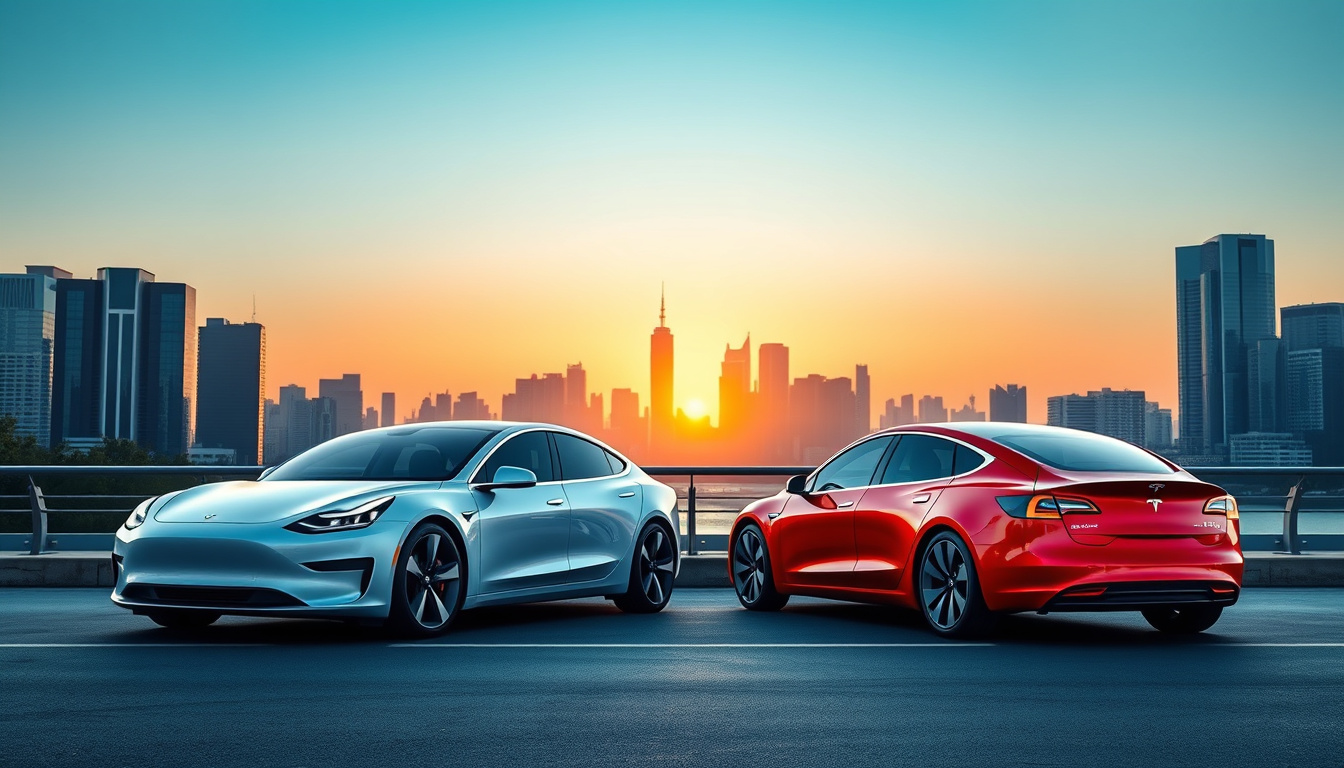
The electric vehicle (EV) market has been revolutionizing the automotive landscape, with sedans leading the charge toward eco-friendly transportation.
Among the top contenders, the BYD Seal and Tesla Model 3 have carved out their niches, captivating tech-savvy consumers and EV enthusiasts alike.
In this article, we dive deep into the BYD Seal vs Tesla Model 3 comparison to help you make an informed decision between these two standout electric sedans.
From performance and interior features to pricing and overall value, we’ll explore what makes each vehicle unique and determine which sedan ultimately reigns supreme in the electric vehicle arena.

Key Takeaways
- The electric sedan market is heating up with strong contenders like the BYD Seal and Tesla Model 3.
- The BYD Seal offers impressive performance metrics that rival the Tesla Model 3.
- Tesla Model 3 is known for its advanced technology and software capabilities.
- Pricing strategies differ significantly between the BYD Seal and Model 3, influencing buyer decisions.
- Ultimately, the choice between BYD Seal and Tesla Model 3 will depend on individual preferences and needs.
Introduction to Electric Sedans
As electric vehicles (EVs) continue to rise in popularity, the demand for electric sedans is at an all-time high, with many consumers eager to find the perfect balance of performance, technology, and affordability.
Among the notable contenders in this market are the BYD Seal and the Tesla Model 3.
These two electric sedans have captured the attention of drivers worldwide, each offering unique features and advantages.
In this article, we will delve into a comprehensive comparison of the BYD Seal vs Tesla Model 3, examining their key specifications, performance metrics, and innovative technologies to help potential buyers make an informed decision.
Overview of BYD Seal
The BYD Seal is rapidly emerging as a strong competitor in the electric vehicle market, particularly when compared to the Tesla Model 3, a long-established leader in the segment.
Designed with a sleek aesthetic and cutting-edge technology, the BYD Seal offers various features aimed at enhancing driving comfort and sustainability.
Equipped with a dual-motor all-wheel-drive system, it promises impressive acceleration and range, comparable to the Tesla Model 3.
Furthermore, the Seal boasts a spacious interior and advanced safety features that are becoming essential for modern EV buyers.
As the automotive industry shifts towards electrification, consumers are keenly analyzing the BYD Seal vs Tesla Model 3, focusing on factors such as price, performance, and real-world usability.
In this evolving EV landscape, the BYD Seal may very well challenge Tesla’s dominance, drawing in customers seeking reliable and innovative electric options.
‘The cars we drive say a lot about us.’ – Alexandra M. Stoddard

Overview of Tesla Model 3
When it comes to the electric vehicle market, the BYD Seal vs Tesla Model 3 stands as a compelling matchup for consumers seeking performance, design, and sustainability.
The Tesla Model 3, renowned for its impressive range, cutting-edge technology, and strong performance, has firmly established itself as a leader in the electric sedan segment.
Its minimalist interior and advanced Autopilot capabilities appeal to tech-savvy drivers, while its quick acceleration and superb handling make it a joy to drive.
In contrast, the BYD Seal, emerging from a reputable Chinese automaker, offers a unique proposition that includes competitive pricing, spacious interior, and innovative battery technology.
This overview of the BYD Seal vs Tesla Model 3 highlights essential features, performance comparisons, and what sets these two vehicles apart in the fast-evolving electric vehicle landscape, aiding consumers in making an informed decision.
Performance Comparison
When comparing the performance of electric vehicles, few models garner as much attention as the BYD Seal vs Tesla Model 3.
Each vehicle boasts impressive specifications that cater to different preferences, making them popular choices among EV enthusiasts.
The Tesla Model 3 is renowned for its robust acceleration and established performance metrics, often clocking 0 to 60 mph in just over 3 seconds with its Performance variant.
In contrast, the BYD Seal offers a sporty driving experience with responsive handling, featuring dual-motor all-wheel drive that delivers a competitive 0 to 60 mph time, depending on the variant chosen.
Both models excel in terms of range, with the Tesla Model 3 leading with its extensive charging network and software capabilities, while the BYD Seal impresses with its innovative battery technology, promising impressive efficiency.
Ultimately, the BYD Seal vs Tesla Model 3 performance comparison reveals two exceptional vehicles that cater to different priorities: speed and technological prowess for Tesla, and value and innovation for BYD.

Interior and Technology Features
When comparing the BYD Seal vs Tesla Model 3, one of the key areas to explore is their interior and technology features, as both vehicles are designed to provide a premium experience to electric vehicle enthusiasts.
The BYD Seal boasts a spacious and modern cabin with high-quality materials, including large touchscreen displays that integrate well with its advanced infotainment system.
Additionally, it offers customizable ambient lighting and ample cargo space, which enhances both comfort and practicality.
On the other hand, the Tesla Model 3 is known for its minimalist interior design, featuring a prominent central touchscreen that controls most of the car’s functions and provides a seamless user interface.
Tesla’s Autopilot features offer remarkable advancements in driver-assistance technology, further enriching the overall driving experience.
Both models come equipped with connectivity features, but Tesla leads in over-the-air updates, allowing for ongoing improvements to software and features even after purchase.
Ultimately, the choice between the BYD Seal vs Tesla Model 3 could hinge on personal preference for interior aesthetics and tech functionality, making it essential to consider what aspects matter most to potential buyers.
Pricing and Value Proposition
When it comes to electric vehicles, the BYD Seal vs Tesla Model 3 comparison brings significant considerations around pricing and value proposition into play.
The BYD Seal has made quite a splash in the EV market with its competitive pricing, often coming in at a lower starting cost than the Tesla Model 3.
For budget-conscious consumers, the Seal offers a compelling alternative without skimping on features or performance.
Notably, the BYD Seal is equipped with advanced technology and innovative design, positioning it as a strong contender against Tesla’s well-established brand.
While the Tesla Model 3 boasts superior brand recognition and a high-performing network of Superchargers, the BYD Seal manages to draw attention with its modern aesthetics and robust range capabilities.
Ultimately, potential buyers need to weigh these factors carefully, considering how each vehicle aligns with their priorities, whether those are cost, technology, or brand loyalty.

Which Sedan Reigns Supreme?
In the battle of electric sedans, the BYD Seal vs Tesla Model 3 presents a compelling comparison for consumers seeking the best in performance, technology, and value.
The Tesla Model 3 has long dominated the market with its superior range, cutting-edge autopilot features, and a well-established charging infrastructure.
However, the BYD Seal is rapidly gaining traction with its stylish design, competitive pricing, and impressive battery technology.
As both vehicles offer unique advantages, the decision ultimately depends on individual needs—whether it’s Tesla’s integration and tech ecosystem or BYD’s affordability and growing reputation.
In conclusion, the choice between the BYD Seal vs Tesla Model 3 not only reflects personal preference but also the evolving landscape of electric vehicles, making it essential to stay informed as advancements continue to shape the future of driving.
Comparison of Price: BYD Seal vs Tesla Model 3 – Which EV Offers Better Value in 2025?
As electric vehicles (EVs) become more mainstream, car buyers are increasingly focused on affordable electric vehicles that balance performance, features, and long-term value. Two of the most talked-about mid-size electric sedans in this space are the BYD Seal and the Tesla Model 3. Both offer compelling reasons to choose them, but when it comes to price comparison, which one truly delivers better bang for your buck in 2025?
In this detailed BYD Seal vs Tesla Model 3 price comparison, we’ll break down upfront costs, trim-level differences, range, charging capabilities, and ownership expenses—while also addressing what real buyers are searching for: “Is the BYD Seal cheaper than Tesla Model 3?”, “Which EV has lower maintenance costs?”, and “Which car is better for daily commuting?”
Starting Price: BYD Seal Undercuts Tesla Significantly
One of the biggest differentiators is the starting price. As of 2025, the BYD Seal typically starts around $35,000–$40,000 (depending on region and configuration), while the Tesla Model 3 starts closer to $47,000 for the Rear-Wheel Drive (RWD) variant in markets like the U.S. and UAE. This price gap makes the BYD Seal one of the most affordable electric vehicles in its class—especially for budget-conscious EV adopters.
For more on value-focused EVs, check out our guide on the most affordable electric car.
This lower entry point doesn’t mean the BYD Seal skimps on tech or design. In fact, it’s built on BYD’s advanced e-Platform 3.0 and features a sleek, aerodynamic silhouette that rivals premium European sedans.
Trim Levels and What You Get for Your Money
The Tesla Model 3 offers three main trims:
- Rear-Wheel Drive (RWD) – ~420 km (260 miles) range
- Long Range AWD – ~580 km (360 miles)
- Performance – ~550 km (340 miles) with track-focused tuning
The BYD Seal typically comes in three variants as well:
- Standard Range (RWD) – ~570 km (CLTC cycle, ~350–380 miles real-world)
- Long Range (RWD) – ~700 km (CLTC, ~420–450 miles estimated real-world)
- Performance (AWD) – ~650 km (CLTC, ~400 miles real-world)
Note: CLTC (China Light-Duty Vehicle Test Cycle) tends to overstate range compared to EPA or WLTP standards, but even adjusted, the Seal’s range is competitive.
While the Tesla Model 3 Performance offers blistering acceleration (0–60 mph in ~3.1 seconds), the BYD Seal Performance hits 0–100 km/h in 3.8 seconds—still impressive for under $50,000 in many markets.
For those comparing high-performance EVs, see our list of the fastest electric cars.
Real-World Ownership Costs: Maintenance, Charging & Depreciation
Searches like “Tesla vs BYD maintenance cost” or “EV with lowest running cost” are rising—and for good reason.
Tesla Model 3 benefits from:
- A mature Supercharger network (now partially open to other brands)
- Over-the-air (OTA) software updates
- Strong resale value (historically)
However, Tesla repairs can be expensive due to proprietary parts and limited service centers in some regions—especially outside North America and Europe.
BYD Seal, on the other hand:
- Uses blade battery technology, which is LFP-based (lithium iron phosphate)—safer, longer-lasting, and less prone to thermal runaway.
- Has simpler mechanical systems and broader service compatibility in Asia and parts of the Middle East.
- Generally shows lower maintenance costs thanks to fewer high-voltage complexities and locally supported service networks.
For deeper insights into battery safety and longevity, read about EV batteries on our site.
Charging Speed & Infrastructure
Charging is a critical factor in electric vehicle ownership. The BYD Seal supports 800V architecture in its Long Range and Performance trims, enabling 10–80% charging in as little as 25–30 minutes on compatible DC fast chargers.
The Tesla Model 3 charges quickly on Superchargers (15–80% in ~25 minutes), but outside Tesla’s network, speeds can vary. With Tesla opening its NACS connector to other manufacturers, future compatibility may improve—but as of 2025, BYD relies on CCS or local standards, which may limit ultra-fast charging access in some regions.
Learn more about charging options in our comprehensive guide on electric vehicle charging.
Interior, Tech & Daily Usability
Inside, the Model 3 remains minimalist—centered around a single 15-inch touchscreen. It’s sleek but lacks physical buttons, which some drivers find distracting.
The BYD Seal offers a more traditional layout with a digital instrument cluster, rotary dials, and higher-quality materials in some markets. It also includes Android Auto and Apple CarPlay—features Tesla famously omits.
Both offer heated seats, advanced driver-assistance systems (ADAS), and panoramic roofs, but the Seal often includes more standard comfort features at lower price points.
Environmental Impact & Sustainability
Many buyers searching for “eco-friendly electric cars” care about more than just tailpipe emissions. BYD manufactures its own batteries and uses more sustainable production methods, including vertical integration. Tesla is also making strides, but BYD’s use of cobalt-free LFP batteries gives it an edge in ethical sourcing.
Explore how EVs help the planet in our article: electric vehicles save environment.
Final Verdict: Who Should Buy Which?
- Choose the Tesla Model 3 if: You prioritize brand prestige, access to Superchargers, cutting-edge software, and plan to keep the car 3–5 years. Ideal for tech-savvy urban drivers.
- Choose the BYD Seal if: You want more range, lower upfront cost, and better interior value—especially in markets like the UAE, Southeast Asia, or Australia where BYD has strong dealer support. Perfect for families or first-time EV buyers seeking a practical, affordable electric vehicle.
For a broader look at sedans in this segment, compare other options in our roundup of affordable electric vehicles.
Conclusion
In the BYD Seal vs Tesla Model 3 price battle, the Seal emerges as the value champion, offering comparable (and sometimes superior) specs at a significantly lower price. However, Tesla still leads in software, charging infrastructure, and global recognition.
Your ideal choice depends on your priorities: cutting-edge tech and ecosystem (Tesla) or cost-efficiency and practicality (BYD). Either way, both represent the exciting future of affordable, sustainable electric mobility—and your wallet (and the planet) will thank you.
Still deciding? Explore more head-to-head comparisons and expert reviews on International Electric Car.
Frequently Asked Questions
What are the key differences between the BYD Seal and the Tesla Model 3?
The BYD Seal offers a distinctive design and a value-oriented price point, while the Tesla Model 3 is known for its extensive charging network and advanced autopilot features. Performance metrics also vary, with the Model 3 typically providing faster acceleration options.
Which electric sedan has better interior technology features?
The Tesla Model 3 is widely recognized for its minimalist interior and large touchscreen interface, providing extensive connectivity and usability.
The BYD Seal, while technologically advanced, may not have the same level of integration and software experience as the Model 3.
How do the performance stats of the BYD Seal compare to the
Tesla Model 3?
The Tesla Model 3 generally offers quicker acceleration times and superior range compared to the BYD Seal.
However, the specific performance metrics can vary based on the trim level and configuration chosen for each model.
What is the price range for the BYD Seal and Tesla Model 3, and which offers better value?
The BYD Seal typically has a lower starting price compared to the Tesla Model 3, making it an appealing option for budget-conscious buyers.
However, the value proposition may depend on the features, performance, and overall ownership experience you are looking for.
Which electric sedan is recommended for first-time EV buyers?
Both the BYD Seal and Tesla Model 3 are excellent choices for first-time EV buyers.
The Model 3 may be more familiar due to Tesla’s popularity and established support network, while the BYD Seal can be a great option for those seeking a more affordable alternative with similar capabilities.