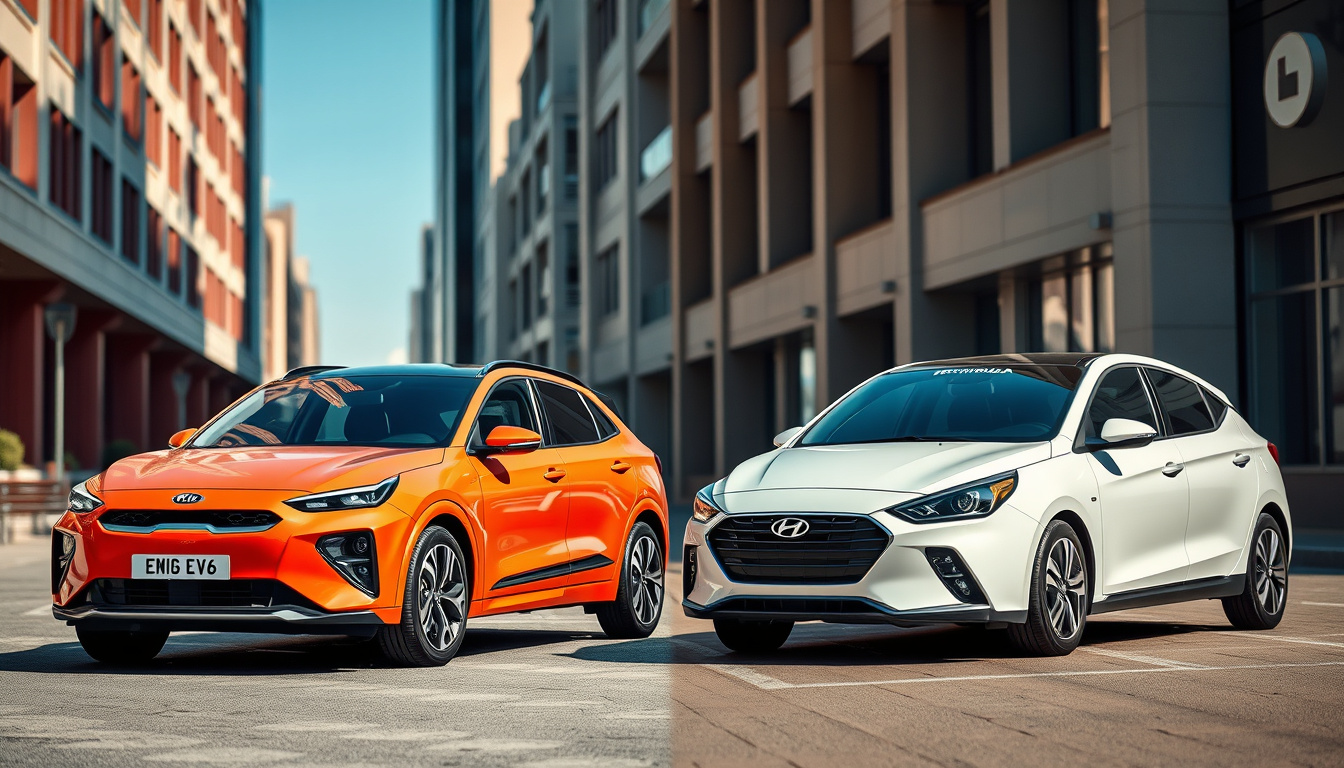
As the automotive industry transitions towards sustainable energy, electric vehicles (EVs) have surged into the spotlight.
Among the impressive lineup of electric options available today, the Kia EV6 and Hyundai Ioniq 5 stand out as two of the most popular and exciting choices for eco-minded consumers looking for performance, aesthetics, and cutting-edge technology.
In this comprehensive comparison, we will delve into the key aspects of both models, helping EV enthusiasts make an informed decision in their quest for the perfect electric vehicle.
Let’s dive into the details of the Kia EV6 vs Hyundai Ioniq 5 to see how these two impressive electric cars stack up against each other.
Key Takeaways
- The article explores the distinct designs and aesthetics of the Kia EV6 and Hyundai Ioniq
5. - Performance comparisons reveal differences in handling and driving experience for both EVs.
- Interior comfort and technology features are analyzed to highlight user experience within each vehicle.
- Charging infrastructure and battery life are crucial factors that influence EV ownership satisfaction.
- Pricing and overall value for money are assessed to guide potential buyers in their decision-making.
Introduction to Electric Vehicles
The world of electric vehicles (EVs) is rapidly evolving, with automakers introducing innovative models that promise not just eco-friendliness but also cutting-edge technology and performance.
Among the frontrunners in this revolution are the Kia EV6 and Hyundai Ioniq 5, two electric crossovers that have garnered significant attention for their design, features, and overall value.
In this article, we will delve into a detailed comparison of the Kia EV6 vs Hyundai Ioniq 5, highlighting their specifications, driving experiences, and technological advancements to help you make an informed decision in your quest for the perfect electric vehicle.
Design and Aesthetics: Kia EV6 vs Hyundai Ioniq 5
When comparing the Kia EV6 vs Hyundai Ioniq 5, it’s hard not to focus on the striking design and aesthetics each model offers.
The Kia EV6 stands out with its bold, sporty silhouette, aggressive lines, and futuristic front fascia, which give it an undeniably dynamic presence on the road.
Its distinctive rear slope and sharp LED headlights contribute to a sleek look that appeals to those craving modernity in their electric vehicle.
In contrast, the Hyundai Ioniq 5 adopts a more retro-futuristic design, reminiscent of 1970s aesthetics, with its boxy shape and pixelated LED lights.
The wide stance and smooth curves of the Ioniq 5 exude a sense of spaciousness and comfort, making it visually inviting.
Both vehicles utilize sustainable materials in their interiors, but the Ioniq 5 offers a more minimalist approach with its open cabin layout, while the EV6 blends sportiness with functionality.
Ultimately, the choice between the Kia EV6 and the Hyundai Ioniq 5 may come down to personal taste in design, but either option represents a step forward in electric vehicle aesthetics.
‘The electric car is not a dream anymore, it is a necessity for the future.’ – Elon Musk
Performance and Handling: A Comparative Analysis
When comparing the Kia EV6 vs Hyundai Ioniq 5, performance and handling are key factors that potential buyers often consider.
Both electric vehicles (EVs) showcase impressive engineering, but their characteristics cater to different driving preferences.
The Kia EV6 is known for its sportier dynamics, featuring a low center of gravity and responsive steering that make it a thrill to drive.
With its dual-motor configuration available in all-wheel-drive variants, it delivers rapid acceleration and a more engaging driving experience.
On the other hand, the Hyundai Ioniq 5 leans towards comfort and stability with a smooth ride and more relaxed handling, making it ideal for everyday commuting and longer trips.
Notably, both vehicles benefit from the same e-GMP platform, ensuring a robust performance.
However, the distinct tuning and weight distribution of the Kia EV6 give it an edge in cornering agility, while the Ioniq 5 offers commendable range and charging capabilities that might appeal to tech-savvy users.
Ultimately, choosing between the Kia EV6 vs Hyundai Ioniq 5 will depend on whether you prioritize performance or comfort in your EV journey.
Interior Comfort and Technology Features
When comparing the Kia EV6 vs Hyundai Ioniq 5, one of the standout areas is interior comfort and technology features.
Both electric vehicles are designed to provide a premium driving experience, but they cater to different tastes.
The Kia EV6 boasts a more modern aesthetic with a sleek, minimalist dashboard complemented by a dual-screen setup that integrates the instrument cluster and infotainment system seamlessly.
This layout enhances driver engagement while ensuring that essential information remains easily accessible.
In contrast, the Hyundai Ioniq 5 offers a quirky yet spacious interior, characterized by its high-tech dual-display and unique buttonless design that emphasizes user-friendliness.
Comfort-wise, both vehicles feature spacious cabins and quality materials, although the Ioniq 5 may feel slightly more open due to its flat floor and generous headroom.
When it comes to technology, the Kia EV6 includes advanced driver-assistance systems and user-friendly connectivity options, whereas the Ioniq 5 focuses on innovative features such as vehicle-to-load capability, allowing you to power devices directly from the car.
Ultimately, both the Kia EV6 and Hyundai Ioniq 5 deliver impressive interiors, but your choice may hinge on personal preference and the specific tech features that resonate with your lifestyle.
Charging Infrastructure and Battery Life
When comparing the Kia EV6 vs Hyundai Ioniq 5, one cannot overlook the crucial aspects of charging infrastructure and battery life, which play a significant role in the overall user experience of these electric vehicles.
The Kia EV6 is equipped with an impressive 800-volt architecture that allows it to achieve ultra-fast charging speeds, enabling it to reach 80% charge in just around 18 minutes when connected to a fast charger.
In contrast, the Hyundai Ioniq 5, while also boasting a robust 800-volt system, offers slightly different charging capabilities that may appeal to different user preferences.
Both vehicles support diverse charging options and are compatible with various charging networks, ensuring convenience for drivers on the go.
In terms of battery life, the Kia EV6 offers two variations: the standard range model with a 58 kWh battery and the long-range option with a
77.4 kWh battery, allowing for a range of approximately 228 to 310 miles, respectively.
Meanwhile, the Hyundai Ioniq 5 provides slightly better range with its
77.4 kWh battery model, achieving an impressive range of up to 303 miles.
Thus, when it comes to charging infrastructure and battery life, both the Kia EV6 and Hyundai Ioniq 5 present compelling options for eco-conscious drivers, inviting them to embrace the future of sustainable transportation.
Safety Ratings and Features
When comparing the Kia EV6 vs Hyundai Ioniq 5, safety ratings and features play a pivotal role in determining the best option for potential buyers.
Both vehicles have undergone rigorous testing and emerged with impressive safety ratings, often achieving top scores from reputable organizations such as the National Highway Traffic Safety Administration (NHTSA) and the Insurance Institute for Highway Safety (IIHS).
The Kia EV6 boasts an extensive suite of advanced driver-assistance systems, including adaptive cruise control, lane-keeping assist, and automatic emergency braking, enhancing its appeal as a family-friendly electric crossover.
On the other hand, the Hyundai Ioniq 5 also emphasizes safety, featuring similar technologies while including additional systems like smart cruise control with machine learning that adapts to driving habits.
With both models receiving high accolades for their safety features, consumers can rest assured knowing that either choice comes with significant protection for both drivers and passengers.
Pricing and Value for Money
When evaluating the Kia EV6 vs Hyundai Ioniq 5, one of the most crucial factors to consider is pricing and overall value for money.
Both electric vehicles boast impressive specifications and advanced features, yet they cater to slightly different segments in the growing EV market.
The Kia EV6 typically starts at a competitive base price, providing a range of models that allow consumers to choose according to their budget and needs.
On the other hand, the Hyundai Ioniq 5, known for its unique design and spacious interior, often comes in at a similar price point, but may offer additional features or a higher battery capacity in its mid-level trims.
Analyzing the options available within each model can guide potential buyers on what they truly get for their investment, making it essential to evaluate not just the initial cost but also the long-term savings associated with electric driving.
This includes considerations like range, charging infrastructure, and available incentives, which can significantly enhance the value proposition of either the Kia EV6 or the Hyundai Ioniq 5.
Kia EV6 vs. Hyundai Ioniq 5: Which E-GMP Electric SUV Should You Choose in 2026?
If you’re shopping for a modern, tech-forward electric SUV with blistering charging speeds and standout design, two names dominate the conversation: the Kia EV6 and Hyundai Ioniq 5. Built on the same revolutionary E-GMP (Electric-Global Modular Platform), they share DNA—but not identity. Think of them as siblings: same brains, different personalities.
The Ioniq 5 leans into retro-futurism—inspired by Hyundai’s 1974 Pony—with a boxy, airy cabin and lounge-like seating. The EV6 is sleeker, sportier, and more driver-focused, borrowing cues from the fastest electric cars with its GT trim hitting 0–60 mph in 3.4 seconds.
Both offer up to 310 miles of range (EPA), 800V ultra-fast charging (10–80% in 18 minutes), and vehicle-to-load (V2L) tech to power your camping gear or laptop. But which one fits your life? If you’re also eyeing other Korean EVs, our guides to Kia electric SUVs or the Hyundai Kona Electric might help round out your shortlist.
Design & Interior: Lounge Vibes vs. Sporty Precision
Step inside, and the philosophies shine.
The Hyundai Ioniq 5 feels like a mobile living room. Its flat floor (thanks to the skateboard-style battery), sliding center console, and enormous panoramic roof create an open, zen-like space. Sustainable materials (recycled PET, eco-paint) and ambient lighting make it feel both calming and premium. It’s ideal for families or remote workers who value space and comfort over sportiness.
The Kia EV6, by contrast, wraps you in a driver-centric cockpit. The curved digital display, lower seating position, and tighter steering response make it feel more like a grand tourer than a crossover. Even the GT model channels Porsche Taycan energy—without the six-figure price tag. Storage is slightly less generous than the Ioniq 5, but the cargo area is more conventional.
Both offer V2L functionality—plug a device into the rear seat or exterior outlet and power tools, e-bikes, or a mini-fridge. A game-changer for road trips in your Fisker Ocean—or these Korean twins.
🔌 Curious how their charging speed stacks up? See our guide on EV charging time.
Performance, Range & Charging: Nearly Identical—But Not Quite
On paper, they’re twins. In practice, subtle differences emerge.
Both offer RWD and AWD variants, with battery options of 58 kWh (Standard) or 77.4 kWh (Long Range). EPA ranges top out at 303 miles (Ioniq 5) and 310 miles (EV6)—but real-world highway driving in cold weather narrows that gap.
Where the EV6 GT pulls ahead is performance:
- 320 kW (430 hp), 0–60 mph in 3.4 sec
- Adaptive suspension, Brembo brakes, and e-LSD for cornering grip
The Ioniq 5’s top trim is quick (0–60 in 5.1 sec), but it prioritizes ride comfort over track readiness.
Charging? Both support up to 235 kW (Ioniq 5) or 240 kW (EV6) on 800V architecture—meaning 10–80% in under 20 minutes at compatible stations like Electrify America. Few EVs on the market match this speed outside of Porsche or Lucid.
🌍 Fast charging + clean energy = big impact. Learn how electric vehicles save the environment.
Kia EV6 vs. Hyundai Ioniq 5: Quick Comparison (2026)
Feature | Hyundai Ioniq 5 | Kia EV6 |
|---|---|---|
Starting Price | $42,100 | $43,300 |
Max EPA Range | 303 miles | 310 miles |
Max DC Charging | 235 kW | 240 kW |
0–60 (GT/Performance) | 5.1 sec | 3.4 sec |
Interior Style | Lounge, spacious | Sporty, driver-focused |
Unique Perk | Sliding center console | GT trim with e-LSD |
Final Thoughts
Choose the Hyundai Ioniq 5 if you want a calm, spacious, family-friendly EV with head-turning design and unmatched comfort.
Choose the Kia EV6 if you crave sharper handling, sportier aesthetics, and track-ready performance—especially in GT form.
Both are among the most affordable electric vehicles with this level of tech and speed. In 2026, you truly can’t go wrong—just know what kind of driver you are.
🔋 Worried about long-term reliability? Dive into how EV batteries perform in real-world E-GMP models.
Frequently Asked Questions
What are the key differences in design between the Kia EV6 and Hyundai Ioniq 5?
The Kia EV6 features a sporty, aggressive design with sharp lines and a futuristic look, while the Hyundai Ioniq 5 presents a more retro-inspired design with a boxy silhouette and unique pixelated lighting elements.
Both vehicles embody a modern aesthetic but cater to different tastes.
How do the performance and handling of the Kia EV6 compare to the Hyundai Ioniq 5?
The Kia EV6 generally offers a more spirited performance, particularly in its GT variant, with quicker acceleration and agile handling.
In contrast, the Hyundai Ioniq 5 focuses on comfort and a smooth driving experience, making it ideal for those who prioritize a more relaxed ride.
What technology features are available in the interiors of the Kia EV6 and Hyundai Ioniq 5?
Both vehicles are packed with advanced technology; however, the Kia EV6 offers a dual curved display for the instrument cluster and infotainment system, whereas the Hyundai Ioniq 5 features a more minimalist layout with a large touchscreen interface.
Each car includes a suite of driver-assistance technologies.
How do the charging infrastructure and battery life of the EV6 and Ioniq 5 compare?
Both the Kia EV6 and Hyundai Ioniq 5 support fast charging capabilities and boast competitive battery ranges.
The EV6 typically has a slightly longer range on a full charge, while the Ioniq 5 provides efficient charging options, making both vehicles practical choices for long-distance travel.
What are the pricing differences and overall value between the Kia EV6 and Hyundai Ioniq 5?
Pricing for both the Kia EV6 and Hyundai Ioniq 5 varies based on the chosen trim levels and options, with the EV6 often priced slightly higher due to its performance features.
In terms of value for money, both offer excellent features and technology for their respective price points, depending on the buyer’s preferences and needs.