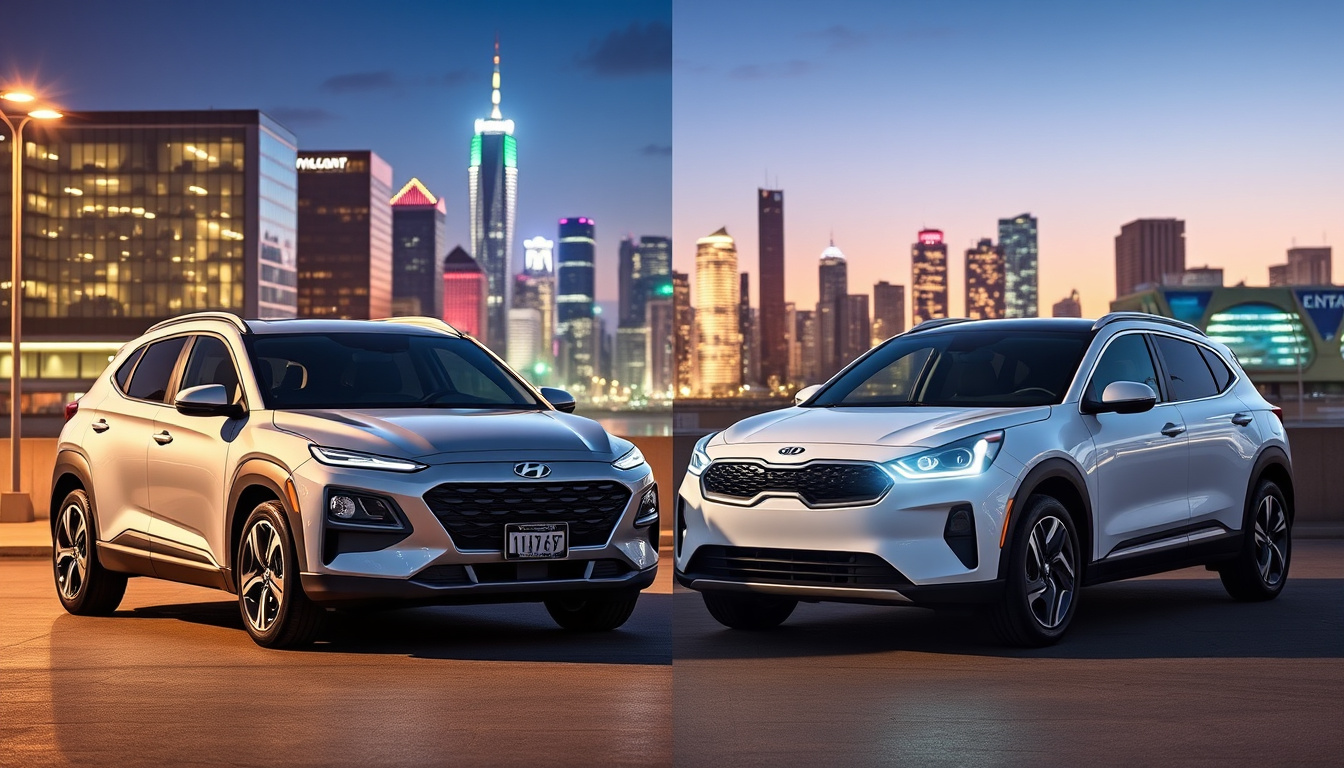
The electric vehicle market has witnessed a surge in popularity, with numerous manufacturers vying for consumer attention with innovative designs, advanced technology, and sustainable solutions.
Hyundai Ioniq 5 and the Kia EV6 is among the most notable contenders in the electric SUV segment.
Both vehicles represent a bold step into the future of transportation, combining eco-friendly powertrains with cutting-edge features.
In this ultimate electric SUV showdown, we’ll explore the distinctions and similarities between these two impressive models, helping you determine which one may be the right fit for your lifestyle.

Key Takeaways
- The electric SUV market is rapidly evolving with new entrants like the Hyundai Ioniq 5 and Kia EV6.
- The Hyundai Ioniq 5 offers a unique and futuristic design, setting it apart in the EV landscape.
- The Kia EV6 emphasizes sporty aesthetics and dynamic features appealing to performance enthusiasts.
- Both vehicles provide impressive interior comfort and cutting-edge technology for a premium driving experience.
- When comparing pricing, the Kia EV6 offers a competitive edge, making it an appealing option for budget-conscious consumers.
Introduction to the Electric SUV Market
The electric SUV market has experienced unprecedented growth in recent years, driven by increasing consumer demand for eco-friendly transportation options and advancements in electric vehicle technology.
Among the standout models in this evolving segment are the Hyundai Ioniq 5 and the Kia EV6, both of which represent a significant leap forward in terms of design, performance, and sustainability.
These two models, sharing the same electric vehicle platform, offer unique features and specifications that cater to a variety of tastes and needs.
In this article, we will explore the Hyundai Ioniq 5 vs Kia EV6, highlighting their key attributes, performance differences, and how they compete in the ever-expanding EV market.
Overview of Hyundai Ioniq 5
The Hyundai Ioniq 5 is making waves in the electric vehicle sector, and for good reason.
As part of Hyundai’s dedicated Ioniq line of eco-friendly vehicles, the Ioniq 5 has been designed with sustainability and innovation at its core.
With striking futuristic aesthetics, a spacious interior, and cutting-edge technology, it stands out in the crowded electric vehicle market.
One of the most talked-about comparisons is the Hyundai Ioniq 5 vs Kia EV6, as both models share the same electric platform but cater to different customer preferences.
The Ioniq 5 promotes a more boxy, practical design ideal for families, while the EV6 leans towards a sportier, performance-oriented approach.
This overview highlights not just the design and technology of the Hyundai Ioniq 5, but also its performance capabilities, which make it a strong contender amidst rising competition in the EV landscape.
‘In the race for electric vehicles, the battle isn’t just about range or tech—it’s about redefining what we want from our cars.’

Overview of Kia EV6
The automotive market is rapidly evolving, particularly in the electric vehicle (EV) segment, where the competition is fierce and exciting.
Two standout models that have captured the attention of consumers and critics alike are the Hyundai Ioniq 5 and the Kia EV6.
Both vehicles represent a significant leap in technology and design, offering impressive ranges, cutting-edge features, and a plethora of safety technologies.
The Kia EV6, in particular, showcases a sleek, modern aesthetic paired with a performance-driven engineering approach.
With its spacious interior, advanced infotainment systems, and a driving range that often exceeds that of its competitors, the EV6 positions itself as a strong contender in the growing EV landscape.
This overview of Kia EV6 will delve into its specifications, performance metrics, and features that set it apart in the Hyundai Ioniq 5 vs Kia EV6 comparison, illustrating why this model deserves serious consideration for those looking to embrace electric mobility.
Exterior Design Comparison
When it comes to the Hyundai Ioniq 5 vs Kia EV6, both vehicles represent a stellar manifestation of modern electric vehicle (EV) design, each boasting distinctive external aesthetics that reflect their brand heritage.
The Ioniq 5 showcases a futuristic vibe with its angular lines and retro-inspired elements, highlighted by its bold tri-LED lighting and a wide stance that enhances its road presence.
On the other hand, the Kia EV6 presents a more athletic silhouette, characterized by its sleek coupe-like roofline and dynamic contours.
The EV6 features a prominent tiger nose grille, albeit reimagined for the EV segment, which ties it back to Kia’s design language while maintaining a contemporary twist.
Both vehicles offer a variety of color options and LED lighting features, but the choice between the Hyundai Ioniq 5 and Kia EV6 ultimately boils down to personal style preference, as they cater to differing aesthetic tastes within the burgeoning electric vehicle market.

Interior Features and Comfort
When comparing the interior features and comfort of the Hyundai Ioniq 5 vs Kia EV6, both vehicles stand out in the increasingly competitive electric vehicle market.
The Hyundai Ioniq 5 boasts a spacious cabin with a minimalist design, featuring high-quality materials and eco-friendly upholstery.
Its dual-screen setup for the infotainment and digital instrument cluster enhances the driver’s experience, providing seamless connectivity and access to essential information.
On the other hand, the Kia EV6 takes a slightly sportier approach, offering adjustable ambient lighting and a more driver-centric cockpit layout.
Both models prioritize passenger comfort, with ample legroom and headroom, but the EV6 impresses with its advanced sound insulation, delivering a quieter ride.
In terms of cargo space, the Ioniq 5 has a slightly larger trunk capacity, providing practical utility for everyday needs.
Ultimately, the choice between the Hyundai Ioniq 5 vs Kia EV6 comes down to personal preferences, but both promise a plush and tech-savvy interior experience.
Performance and Range Analysis
When comparing the Hyundai Ioniq 5 vs Kia EV6, performance and range are critical factors that can significantly influence a buyer’s decision.
Both electric vehicles (EVs) represent the pinnacle of their manufacturers’ technology, offering impressive powertrains and striking designs.
The Hyundai Ioniq 5 boasts a dual-motor setup in its AWD variants, delivering up to 320 horsepower and 0-60 mph in just over five seconds.
Its range, depending on the battery pack, can extend to approximately 300 miles on a single charge, making it a top contender for those looking for both efficiency and exhilaration.
On the other hand, the Kia EV6 features a performance-oriented GT version that pushes the horsepower to an exhilarating 576 hp, ensuring ultra-responsive acceleration, while its standard models offer respectable range estimates around 310 miles.
Both vehicles come equipped with cutting-edge technology, but the choice between the Hyundai Ioniq 5 vs Kia EV6 often comes down to individual preferences regarding performance dynamics and range capabilities, catering to different types of drivers in the burgeoning EV market.

Pricing and Value for Money
When comparing the Hyundai Ioniq 5 vs Kia EV6 in terms of pricing and value for money, both electric vehicles (EVs) showcase a remarkable balance between cost and premium features.
The Hyundai Ioniq 5 typically offers a starting price point that is competitive within its segment, often making it a more budget-friendly option for potential buyers.
It provides a variety of trims, allowing consumers to choose a configuration that suits their financial considerations, while still enjoying cutting-edge technology and a spacious interior.
On the other hand, the Kia EV6, though slightly more expensive on average, emphasizes sportier design and performance, appealing to drivers looking for a dynamic driving experience.
Its range of features often includes higher-end tech, making the additional cost seem justified for those seeking luxury.
Ultimately, when evaluating the Hyundai Ioniq 5 vs Kia EV6, it’s essential to consider individual preferences and needs, as both vehicles offer strong value propositions that cater to different aspects of the EV market.
Hyundai Ioniq 5 vs. Kia EV6: 2026 Detailed Comparison
Category | Hyundai Ioniq 5 | Kia EV6 | Winner / Notes |
|---|---|---|---|
Starting Price (USD) | $41,400 (SE Standard) | $42,600 (Wind RWD) | Ioniq 5 – Slightly more accessible entry point |
Top Trim Price | $59,800 (Limited AWD) | $61,600 (GT-Line AWD) | Comparable premium positioning |
Design Philosophy | Retro-futuristic “Pixel” aesthetic with parametric headlights; boxy, spacious silhouette | Sleek fastback coupe-SUV profile; aggressive tiger-nose grille reinterpretation | Subjective: Ioniq 5 = distinctive & polarizing; EV6 = sportier mainstream appeal |
EPA Range (Max) | 303 miles (Long Range RWD) | 310 miles (Wind RWD) | EV6 – Marginal edge due to superior aerodynamics (0.28 Cd vs. 0.29 Cd) |
0–60 mph (Standard) | 5.2 sec (Long Range RWD) | 5.1 sec (Wind RWD) | Nearly identical in base trims |
Performance Variant | N/A (standard lineup only) | EV6 GT: 576 hp, 0–60 mph in 3.4 sec, 167 mph top speed, Nürburgring-tuned chassis | EV6 – Only option for true performance driving; no Ioniq 5 N equivalent yet |
Charging Speed | 10–80% in 18 minutes (350 kW DC, 800V architecture) | 10–80% in 18 minutes (350 kW DC, 800V architecture) | Tie – Both lead the industry in ultra-fast charging capability |
Cargo Space | 27.2 cu ft (behind rear seats) 59.3 cu ft (seats folded) | 24.4 cu ft (behind rear seats) 50.2 cu ft (seats folded) | Ioniq 5 – More practical for families; flat load floor advantage |
Seating Capacity | 5 passengers | 5 passengers | Tie |
Unique Feature | Vehicle-to-Load (V2L): Power outlets inside cabin + external port for camping/tools | Augmented Reality HUD (GT-Line): Projects navigation onto windshield | Ioniq 5 edges ahead for utility-focused buyers |
Infotainment | Dual 12.3″ curved screens; Hyundai Bluelink | Dual 12.3″ screens; Kia Connect with remote parking assist | Nearly identical hardware; software preference varies |
Warranty | 10-year/100,000-mile battery warranty | 10-year/100,000-mile battery warranty | Tie – Industry-leading coverage |
Best For | Drivers prioritizing sporty handling, performance enthusiasts eyeing the GT variant, those preferring conventional SUV styling | Context-dependent | |
2026 Updates | New “N-inspired” performance parts package (aero kit, suspension tuning) | GT variant now includes drift mode recalibration + track telemetry app | Both receiving meaningful enhancements |
Frequently Asked Questions
What are the key differences in exterior design between the Hyundai Ioniq 5 and Kia EV6?
The Hyundai Ioniq 5 features a retro-futuristic design with sharp lines and a boxy silhouette, while the Kia EV6 sports a more aggressive, sporty look with a streamlined profile and distinctive headlights.
Which electric SUV offers more interior space and comfort?
The Hyundai Ioniq 5 is generally praised for its spacious interior and comfortable seating, offering generous legroom and a flat floor, while the Kia EV6 also provides a modern interior but may feel slightly tighter in rear-seat space.
How does the performance of the Hyundai Ioniq 5 compare to the Kia EV6?
The Kia EV6 typically offers a sportier driving experience with more powerful engine options, while the Hyundai Ioniq 5 focuses on a balance of comfort and efficiency, with slightly less emphasis on performance.
What is the price range for the Hyundai Ioniq 5 and Kia EV6?
Both models are competitively priced in the electric SUV market, with base models starting around $40,000, but prices can increase significantly based on options and trim levels; typically, the Kia EV6 may offer more features for the same price point.
Which electric SUV provides better value for money, considering features and range?
While both the Hyundai Ioniq 5 and Kia EV6 offer great value, the choice depends on priorities—if you value unique design and interior space, the Ioniq 5 is excellent, while the EV6 might edge out in features and a sportier driving experience.